
Works by series
DORMIR AL RAS (1994 - 1996)
Reflections on migration: the journey and the challenges of integration in the new country. Simplification of forms.
After his first trip to Morocco in 1980, Enric Alfons’s gaze fell under the spell of the Arab world, so when he was awarded an Alfons Roig grant, in its inaugural year of 1981, he set the money aside for a trip to North Africa.
His first three series (Fetitxes andalusins, 1982; Deessa Màscara, 1984; and Malhafa, 1989) centred around the leitmotif of the female figure. In his following series (Espills d’un jardí, 1991-92; and Gouttes d’or dans la ville, 1993), the result of his continuous travels in this area, a narrative intention began to emerge focusing on the everyday lives of North African and sub-Saharan people in their countries of origin but also as migrants in Europe. At the same time, he felt driven by a need to capture the fleeting moment, the reason why we can see a multiplicity of more simplified forms in his works, and for this purpose he carried around with him a small trunk full of small wood boards that enabled him to paint on the spot.
Between 1992 and 1994, he immersed himself in a project on Maghrebi migration to Spain, culminating in the 1994 publication of the book Dormir al raso,[1] by Pasqual Moreno Torregrosa[2] and Mohamed El Gheryb,[3] as well as in Alfons’s own series of paintings Dormir al ras, which continued the trajectory he had begun in 1982. The authors undertook prior research in Spain before engaging in direct fieldwork: Mohamed El Gheryb returned to Morocco, exploring boarding houses in Tetouan, Ksar el-Kebir[4], etc.; he later entered Spain where he worked harvesting vegetables in El Ejido as an undocumented migrant, living in shacks in Fuente Álamo and in abandoned farmhouses in the Valencian countryside. Meanwhile, Pasqual Moreno followed the same route as El Gheryb through the cities of North Africa, documenting himself and giving shape to the book, contributing his own experience.
Enric Alfons was often a fellow traveller on this journey. He accompanied El Gheryb along the beaches of Tarifa, where they found the remains of shipwrecked feluccas, and also through the huerta of Valencia, the fertile, irrigated agricultural region surrounding the city, where migrants lived in extremely precarious conditions. He also frequently travelled to and spent months in Larache, Tangier, Ksar es-Seghir, Tetouan, Oued Laou, Al Hoceima and Nador, coastal and nearby inland towns in Morocco where migrants gathered information, made contacts and preparations to cross the Strait.
All of this is documented in his travel notebooks, photographs and, most importantly, in his paintings and wood panels. The catalogue for the exhibition Dormir al ras,[5] held at Caja Rural de Torrent in November–December 1994, included a number of additional elements that afforded a broader overview of the issue: texts by Pasqual Moreno and Juan Ángel Blasco Carrascosa,[6] photographs of the journey, and Alfons’s own commentary accompanying each one of the twelve paintings on exhibit. Some of his reflections include:
- “Together with my friend Mohamed El Gheryb, I collected numerous stray shoes we found on the beaches of Tarifa, coming from various migrant shipwrecks.” (Zapatos de Tarifa)
- “In Tetouan, at seven in the evening on Mohamed V Avenue, as passers-by looked on with total indifference, boys with wild, bulging eyes inhale solvent or glue soaked into pieces of cloth. They sell loose Marlboro cigarettes, their reality unashamedly on view for all to see in all its rawness.” (Atfal, Solusiun)
- “From Ksar es-Seghir, Morocco, on a dark night, the brightest star is Tarifa. They are guided by the lights of the petrol station on the outskirts of the city near the beach. In summer 1992, at certain times of night, the Guardia Civil often obliged the petrol station to turn off the lights in order to obstruct the arrival of feluccas carrying undocumented migrants.” (Buscando una estrella)
- “A young man from Beni-Mellal wanders around Zoco Chico after being deported from Algeciras by the Spanish police. He is too ashamed to return home. He lost everything in the failed crossing, including the money he had borrowed from friends. I’m the only Westerner staying at the Fuentis boarding house. The others are from Tlemcen, Beni-Mellal, Dakar and Bamako… They are waiting there for the right time to cross the Strait.” (Tánger, Zoco Chico)
- “Sensual looks, colours and smells in the market.” (Souk, Larache)
- “In the countryside surrounding Valencia, if you see an abandoned house with the remains of a fire, a blackened pot or drum used to heat water, and a tiny shack built of sacks, plastic and sticks, then you’ve come across a hammam or Arab bath.” (Hammam en Foios)
- “At nightfall, I was invited by a young Moroccan and an Algerian to break the Ramadan fast in the abandoned house in the municipality of Puzol where they lived.” (Dinar a les casetes de l’Horta de València)
- “Marhaba! Welcome to the bars or places where there might be some remote possibility of finding work. Of course, at low wages: you’re different. It’s the best of the bad options you are offered.” (Llocs de contratació)
[…]
In the aforementioned catalogue (see note 5), Pasqual Moreno writes: “A man with Enric Alfons’s artistic and human sensitivity has been able to capture in his work the hectic, bustling life of Marrakesh, alongside the uprootedness and misery of Maghrebi migrants in Belleville. His art has followed the always dramatic path of those who had to leave their douar in the Kabyle mountains or in the Lukus plains to make a living in France, Germany, Belgium… or Spain.” [7]
Elsewhere in the same catalogue, the art critic Juan Ángel Blasco Carrascosa points out that, underlying the narrative intent of the series, is a profound social concern with Maghrebi migrants. He describes Alfons’s painting as “fresh, agile and poetic,” while pinpointing a range of subject matters such as xenophobia, racism, human suffering and solidarity, as if it were the chronicle of a social conflict foretold. At this juncture, it is worth citing Alfons himself,[8] who insists that his painting is grounded in personal commitment and is not driven by any political ideology but rather by reflection on the social issues affecting migrants. What underpins Alfons’s work, he concludes, is a deeply-felt humanitarian sensibility.
Turing his attention to formal recourses, Blasco Carrascosa spoke of simplified forms that shift between abstraction and figuration, and a spontaneous, multicoloured gesturality with differing degrees of figurativeness and chromatic ranges, depending on the “atmosphere” evoked in each painting.
Juan Bautista Peiró[9] [10] also highlights Alfons’s use of colour and gesture, paying particular attention to his use of writing: incorporating words and pictograms into his paintings, as shapes, symbols or signs, and penning short texts for the exhibition catalogue.
The most important solo exhibitions of work from this period are Dormir al ras at Caja Rural de Torrent (November–December 1994) and at Galería Rosalía Sender in Valencia (December 1995–January 1996).
Notable group exhibitions featuring works from this series include 15/41 at Sala Parpalló,[11] (May–August 1995) and Encrucijadas mediterráneas, viajes y errares (April–June 2000), both organised by the Diputació de València.
[1] Dormir al raso, by Pasqual Moreno Torregrosa and Mohamed El Gheryb, VOSA, presented by Manuel Vázquez Montalbán with an introduction by Mahdi Elmandjara.
[2] Pasqual Moreno Torregrosa : Grupo de Economía Internacional : UPV
[3] Born in Tetuán, emigrated to Spain in 1989, and president of ATIM (Association of Moroccan Workers and Immigrants) since 1994.
[4] Ksar es-Seghir in French, the name Enric Alfons uses in his paintings.
[5] Catalogue Dormir al ras, published by Caja Rural de Torrent, 1994.
[6] PhD in Philosophy and Education Sciences from the University of Valencia, PhD in Fine Arts from the Polytechnic University of Valencia, and art critic.
[7] Self-portrait in the Mirror of Time, in the catalogue for the exhibition Dormir al ras, at Caja Rural de Torrent, November-December 1994.
[8] Articles J.R.S: “El pintor expone la serie completa de "Dormir al Ras” in Levante, 17 December 1995; and María Ángeles Arazo: “Enric Alfons: el pintor comprometido”, in Las Provincias, 20 July 1997.
[9] Professor at the San Carlos School of Fine Arts, UPV, PhD in Fine Arts, art critic, researcher, docent.
[10] Juan B. Peiró: “Dormir al Ras,” in Levante, 9 December 1994.
[11] 15/41: fifteen for the number of years since the opening of Sala Parpalló by the Provincial Council of Valencia, and 41 for the number of artists who received the Alfons Roig prizes and grants.
In the aforementioned catalogue (see note 5), Pasqual Moreno writes: “A man with Enric Alfons’s artistic and human sensitivity has been able to capture in his work the hectic, bustling life of Marrakesh, alongside the uprootedness and misery of Maghrebi migrants in Belleville. His art has followed the always dramatic path of those who had to leave their douar in the Kabyle mountains or in the Lukus plains to make a living in France, Germany, Belgium… or Spain.” [7]
Elsewhere in the same catalogue, the art critic Juan Ángel Blasco Carrascosa points out that, underlying the narrative intent of the series, is a profound social concern with Maghrebi migrants. He describes Alfons’s painting as “fresh, agile and poetic,” while pinpointing a range of subject matters such as xenophobia, racism, human suffering and solidarity, as if it were the chronicle of a social conflict foretold. At this juncture, it is worth citing Alfons himself,[8] who insists that his painting is grounded in personal commitment and is not driven by any political ideology but rather by reflection on the social issues affecting migrants. What underpins Alfons’s work, he concludes, is a deeply-felt humanitarian sensibility.
Turing his attention to formal recourses, Blasco Carrascosa spoke of simplified forms that shift between abstraction and figuration, and a spontaneous, multicoloured gesturality with differing degrees of figurativeness and chromatic ranges, depending on the “atmosphere” evoked in each painting.
Juan Bautista Peiró[9] [10] also highlights Alfons’s use of colour and gesture, paying particular attention to his use of writing: incorporating words and pictograms into his paintings, as shapes, symbols or signs, and penning short texts for the exhibition catalogue.
The most important solo exhibitions of work from this period are Dormir al ras at Caja Rural de Torrent (November–December 1994) and at Galería Rosalía Sender in Valencia (December 1995–January 1996).
Notable group exhibitions featuring works from this series include 15/41 at Sala Parpalló,[11] (May–August 1995) and Encrucijadas mediterráneas, viajes y errares (April–June 2000), both organised by the Diputació de València.
[1] Dormir al raso, by Pasqual Moreno Torregrosa and Mohamed El Gheryb, VOSA, presented by Manuel Vázquez Montalbán with an introduction by Mahdi Elmandjara.
[2] Pasqual Moreno Torregrosa : Grupo de Economía Internacional : UPV
[3] Born in Tetuán, emigrated to Spain in 1989, and president of ATIM (Association of Moroccan Workers and Immigrants) since 1994.
[4] Ksar es-Seghir in French, the name Enric Alfons uses in his paintings.
[5] Catalogue Dormir al ras, published by Caja Rural de Torrent, 1994.
[6] PhD in Philosophy and Education Sciences from the University of Valencia, PhD in Fine Arts from the Polytechnic University of Valencia, and art critic.
[7] Self-portrait in the Mirror of Time, in the catalogue for the exhibition Dormir al ras, at Caja Rural de Torrent, November-December 1994.
[8] Articles J.R.S: “El pintor expone la serie completa de "Dormir al Ras” in Levante, 17 December 1995; and María Ángeles Arazo: “Enric Alfons: el pintor comprometido”, in Las Provincias, 20 July 1997.
[9] Professor at the San Carlos School of Fine Arts, UPV, PhD in Fine Arts, art critic, researcher, docent.
[10] Juan B. Peiró: “Dormir al Ras,” in Levante, 9 December 1994.
[11] 15/41: fifteen for the number of years since the opening of Sala Parpalló by the Provincial Council of Valencia, and 41 for the number of artists who received the Alfons Roig prizes and grants.
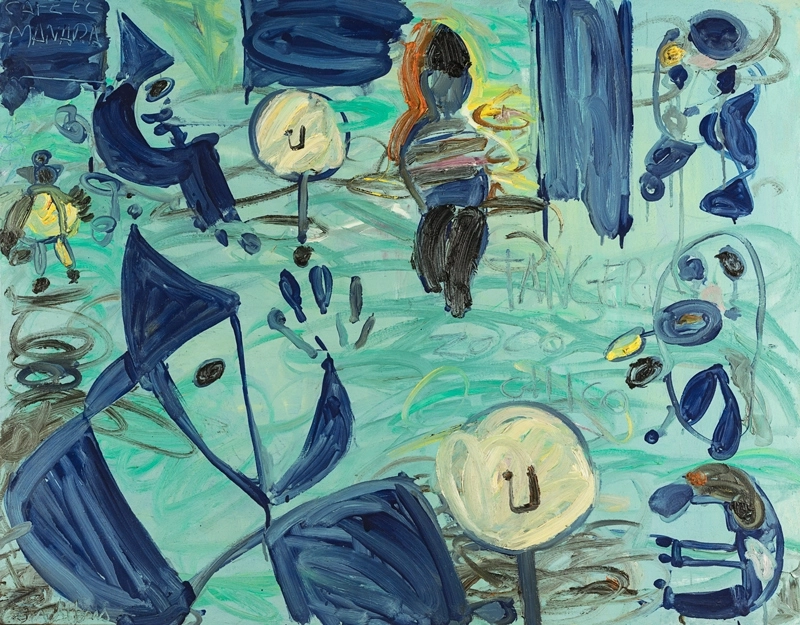
Zoco Chico, Tánger, c.1994
Oil/canvas, 73 x 92 cm
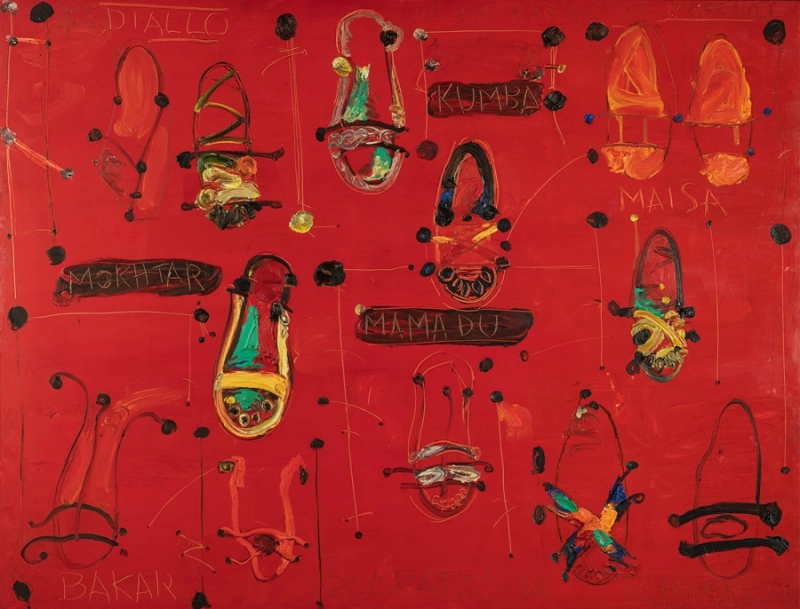
Zapatos de Tarifa, 1994
Oil/panel, 91 x 120 cm
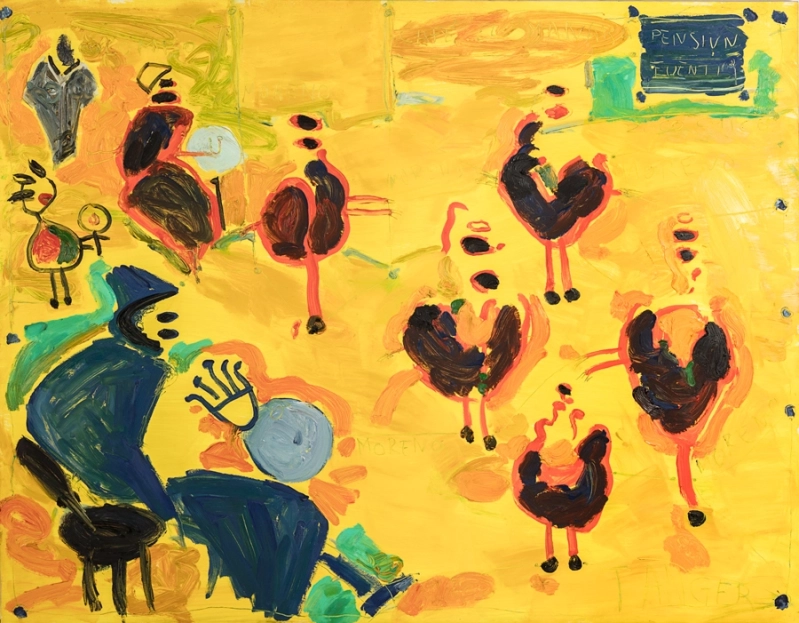
Untitled (the series Dormir al ras), 1994
Oil/panel, 120 x 150 cm
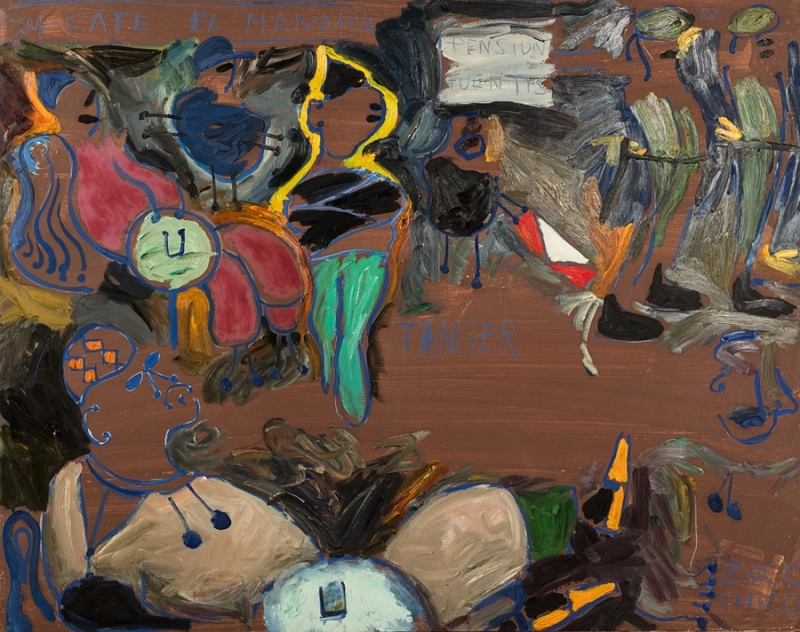
Tánger, Zoco Chico, 1994
Oil/panel, 120 x 150 cm
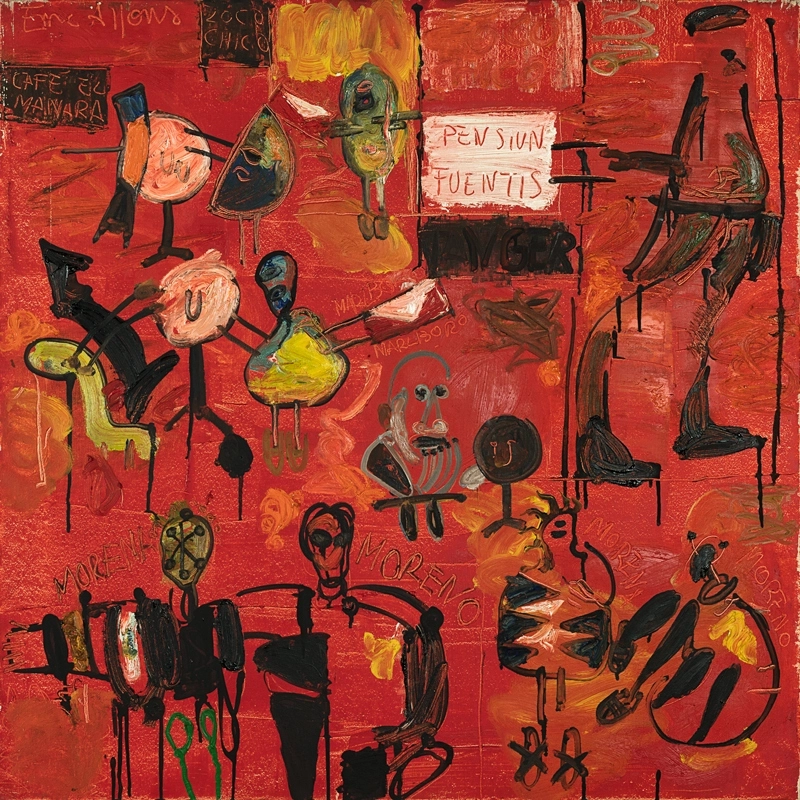
Untitled (Pensión Fuentis, Tánger), c.1994
Oil/canvas, 92 x 92 cm
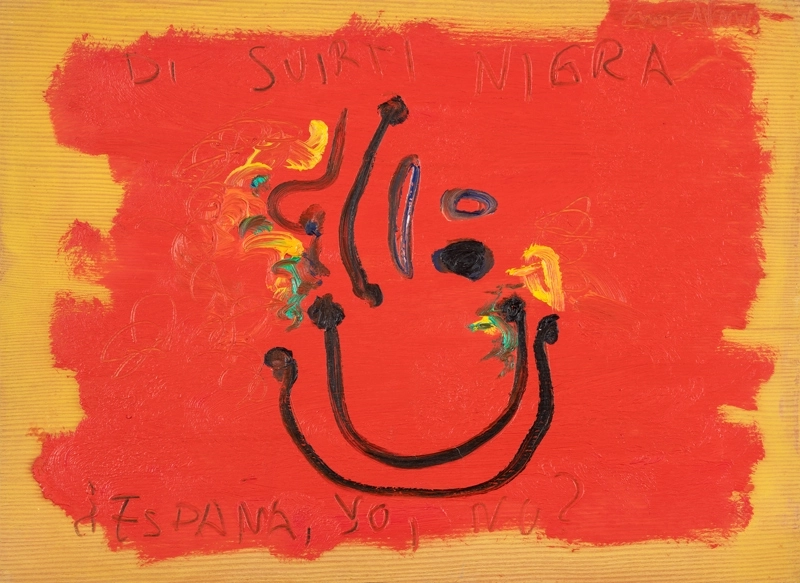
Di suirti nigra, 1994
Oil/panel, 38 x 52 cm
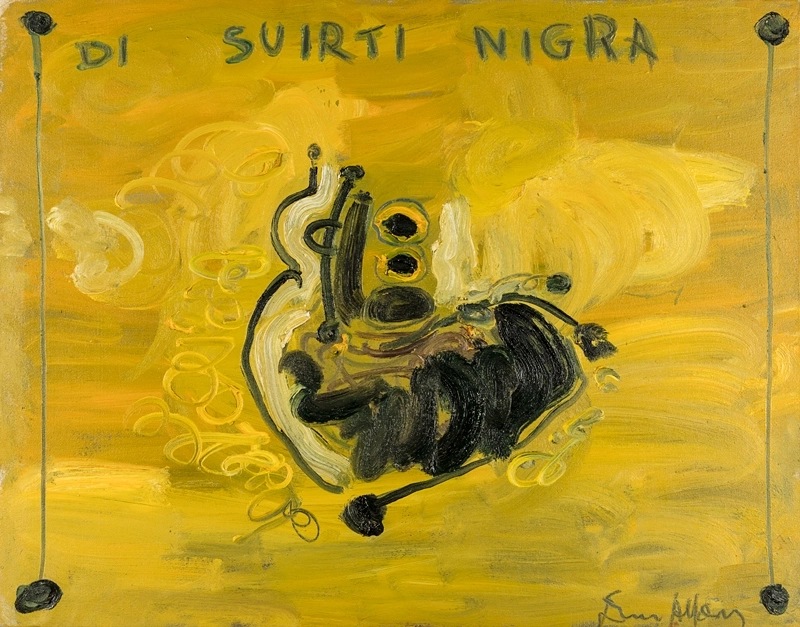
Di suirti nigra, 1994
Oil/canvas, 73 x 92 cm
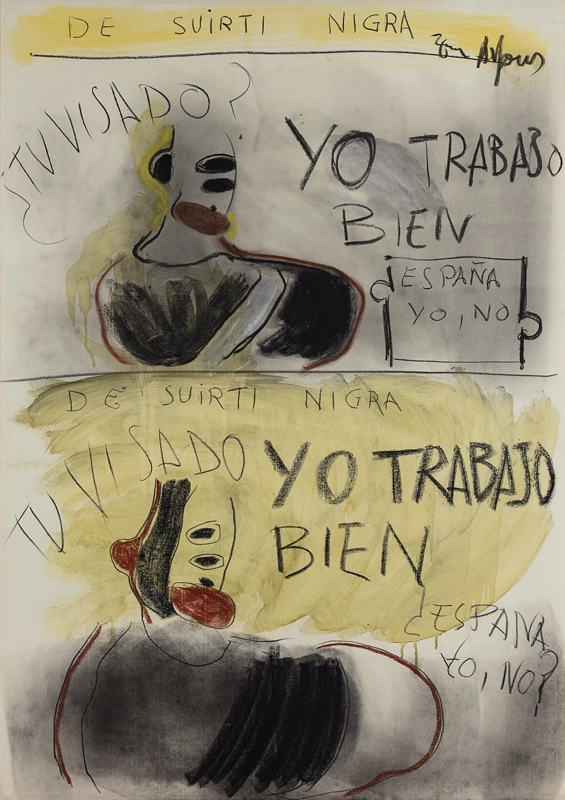
Di suirti nigra, 1994
Mixed media/paper, 100 x 70 cm
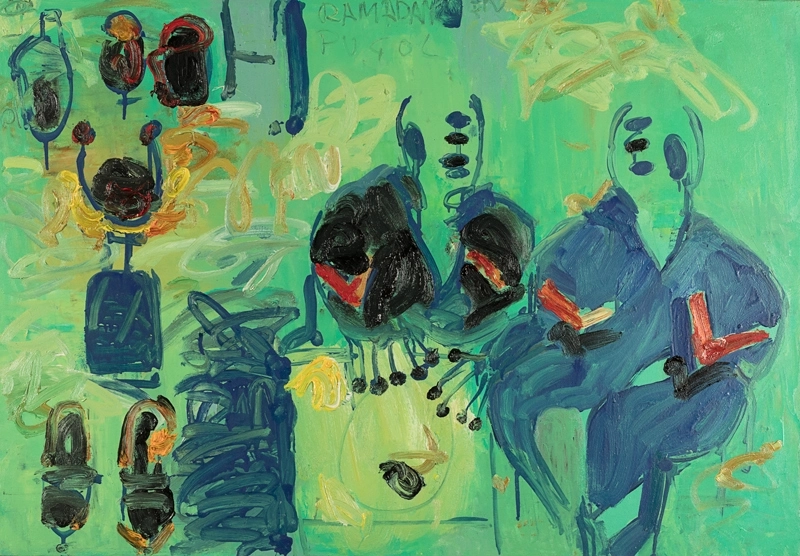
Untitled (Ramadan en Puçol), c.1994
Oil/canvas, 65 x 92 cm
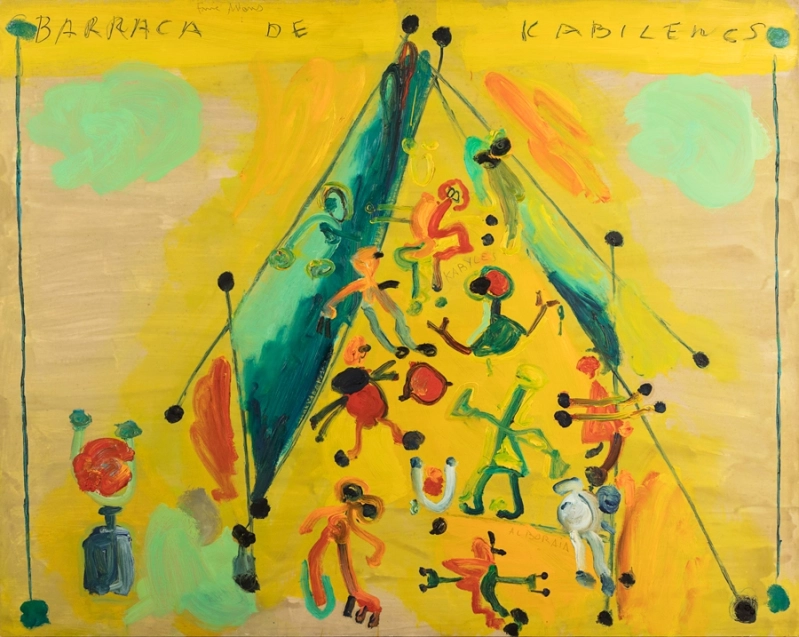
Barraca de Kabilencs, 1994
Oil/panel, 120 x 150 cm
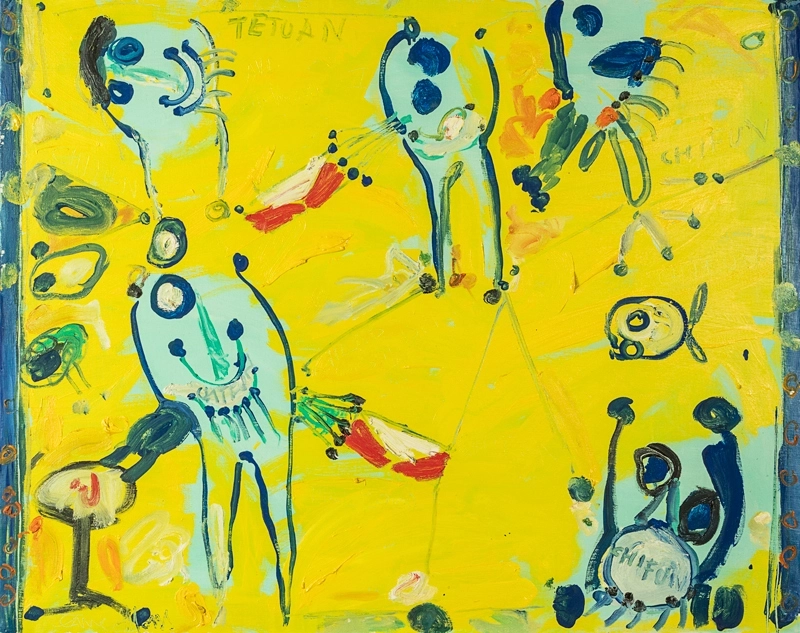
Atfal. Solusiun, 1994
Oil/canvas, 73 x 92 cm
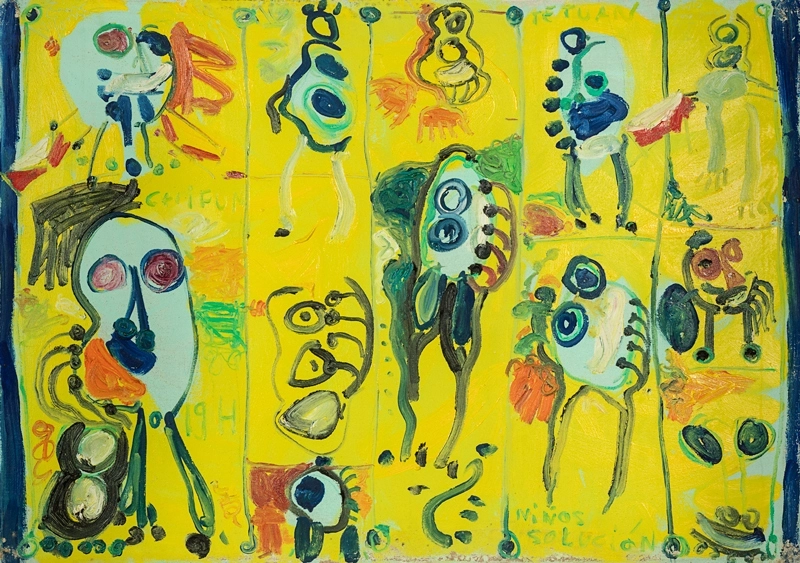
Atfal. Solusiun, 1994
Oil/canvas, 65 x 92 cm
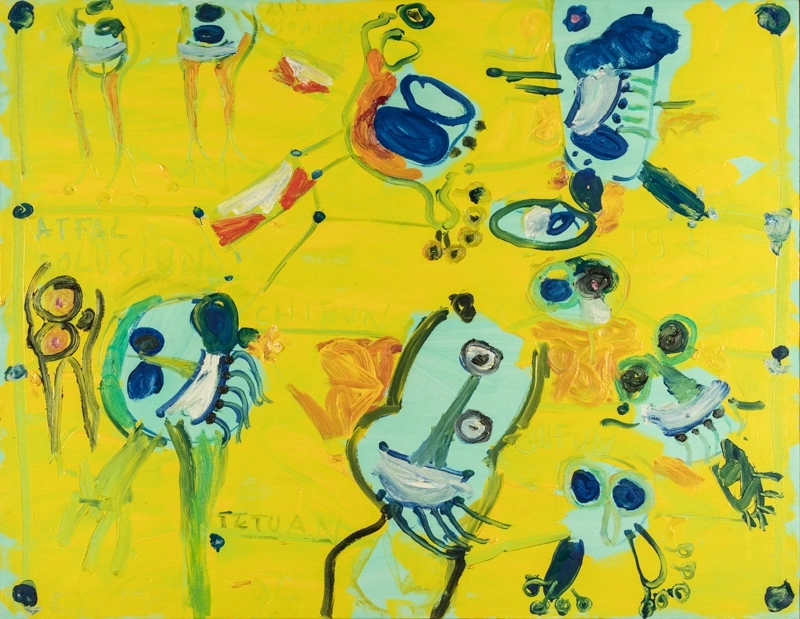
Atfal. Solusiun, 1995
Oil/canvas, 73 x 92 cm
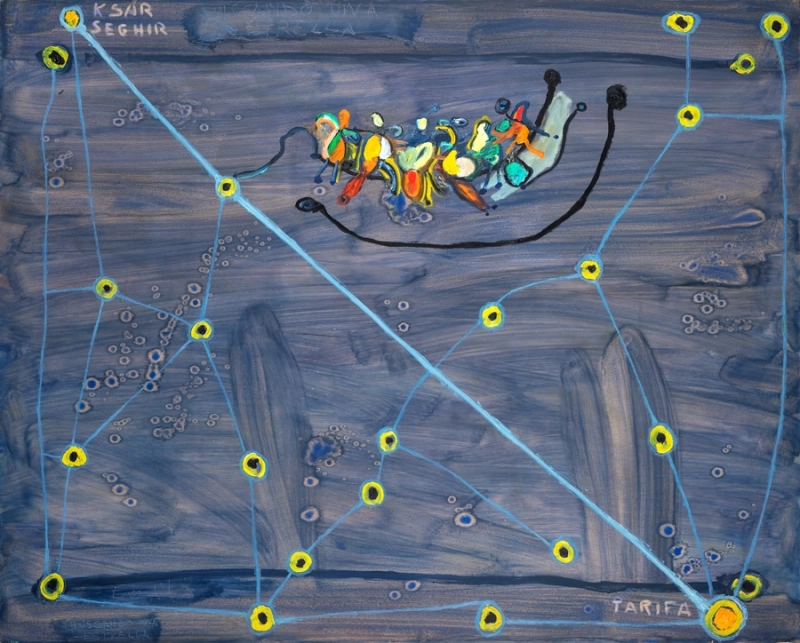
Buscando una estrella, 1994
Oil/panel, 120 x 150 cm
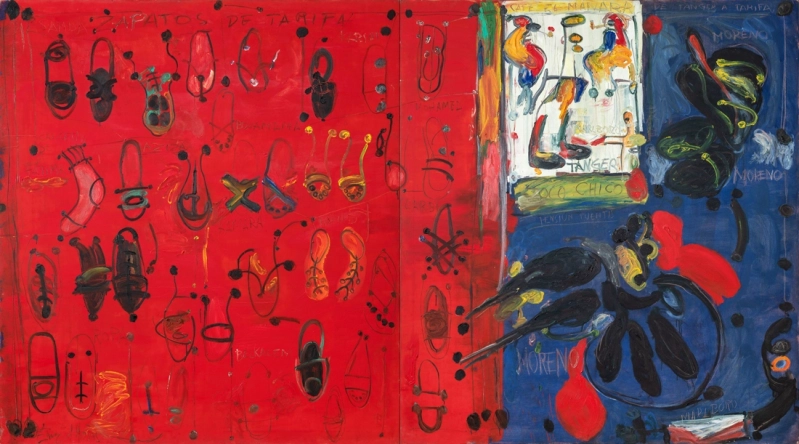
De Tánger a Tarifa, 1995
Diptych. Oil/canvas, 200 x 360 cm
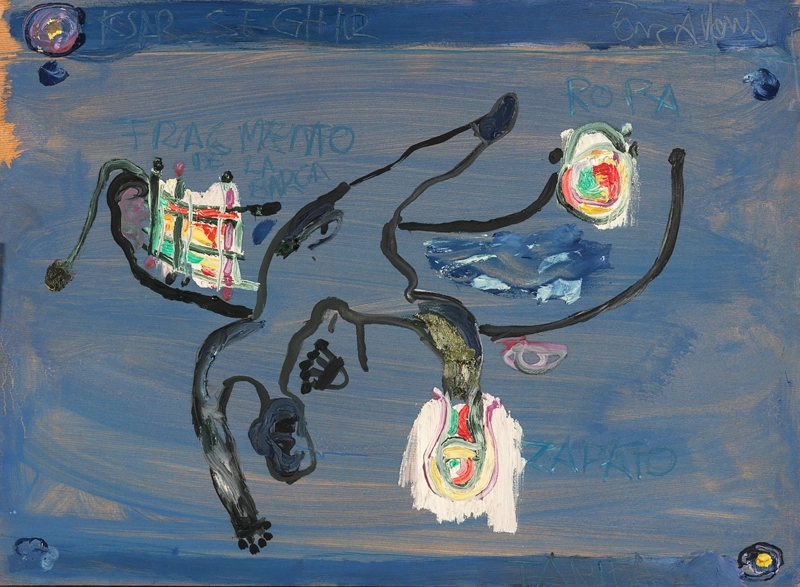
Fragmento de faluca, 1995
Oil/panel, 38 x 52 cm
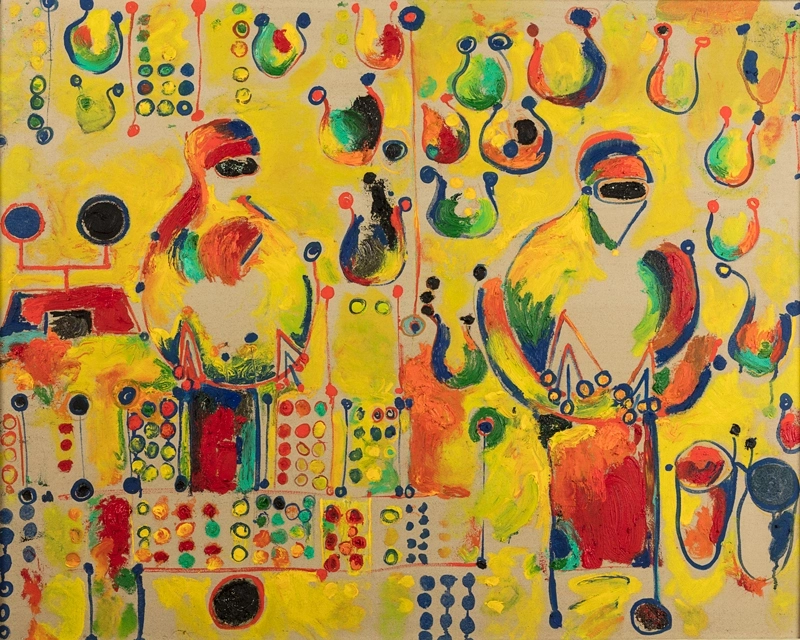
Souk, 1995
Oil/canvas, 73 x 92 cm
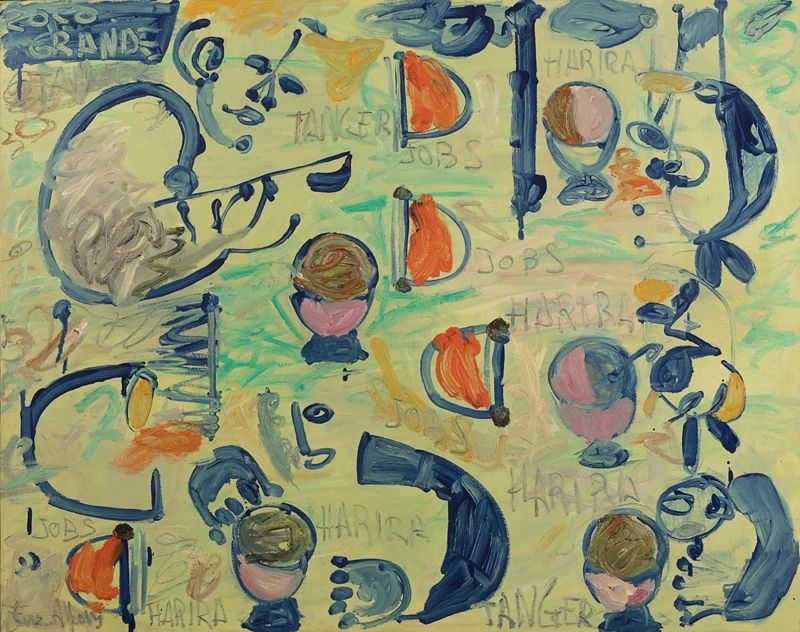
Harira, 1996
Oil/canvas, 73 x 92 cm
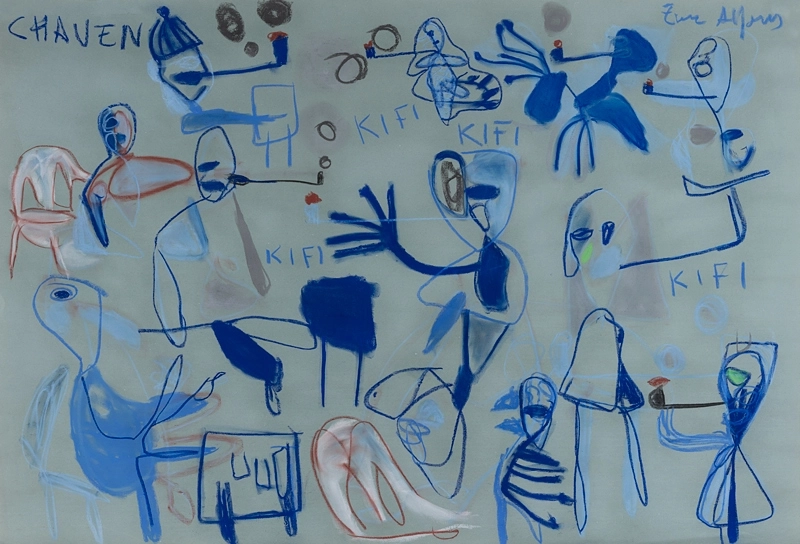
Kif, kif, 1996
Mixed media/paper, 70 x 100 cm
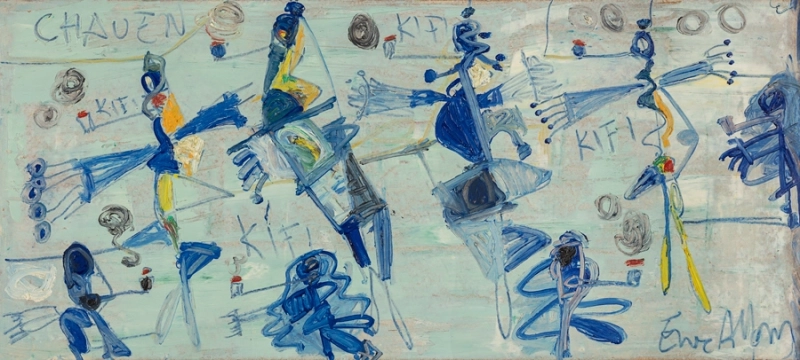
Untitled (Kif, kif, Chaouen), c.1997
Oil/panel, 40 x 90 cm
