Works by series
APUNTES ALBANESES (1997)
Interactions on the ground in Albania’s difficult period of transition. From the image to the sign.
His first three series (Fetitxes andalusins, 1982; Deessa Màscara, 1984; and Malhafa, 1989) centred around the leitmotif of the female figure. In his following series (Espills d’un jardí, 1991-92; and Gouttes d’or dans la ville, 1993), the result of his continuous travels in this area, a narrative intention began to emerge focusing on the everyday lives of North African and sub-Saharan people in their countries of origin but also as migrants in Europe. At the same time, he felt driven by a need to capture the fleeting moment, the reason why we can see a multiplicity of more simplified forms in his works, and for this purpose he carried around with him a small trunk full of small wood boards that enabled him to paint on the spot.
This is followed by the series Dormir al ras (1994–1996), focused on the hardships of migration, encompassing both the adversity of the actual journey as well as the challenges of language, employment, housing, cultural and social integration faced by migrants in their host countries. With each successive series, we can see how the artist’s personal commitment is increasingly stronger, driven not by political ideology but by a thoughtful personal response to the social issues affecting migrants. Various critics have underscored the simplified forms in his paintings from this period, the varying degrees of figuration and the range of colours depending on the atmosphere he wishes to evoke in each work.[1]
In 1997, Alfons presents Apuntes Albaneses (Albaneses). He had visited Albania for the first time back in 1993, shortly after the fall of communism and during the country’s chaotic and sudden transition to capitalism, which led to economic collapse, soaring unemployment, unbridled inflation, corruption and a sharp rise in social inequality, among other ills. Furthermore, because of its location Albania was geographically surrounded by the so-called Balkan Wars in the decade of the nineties, with a significant number of Albanian people living in the areas in conflict, which had a big impact on the internal situation of the country. This was particularly notable in the case of Kosovo in 1999, which was also reflected in some of his works following his visit to the region.
From 1993 until 1997, equipped with his travel journals and a trunk full of small wood panels for painting, Alfons once again wrote and sketched scenes about migration, this time triggered by the crisis in Albania, in this case towards Italy, Greece and Turkey. In these sketches and panels, which he later developed into larger works, he addressed many of the themes he came across on his journey. He returned once and again to certain subject matters, such as the ascent of the Gramos Mountains,[2] queues for passports outside the Greek consulate in Gjirokastër, armed uprising… often sharply contrasted with some celebratory or festive touches, such as "the bride in the uprising" or "dance before crossing the mountain". As journalist Maribel Marín Yarza argued in the context of the exhibition Viajar, perder países, Enric Alfons uses the language of the brush to narrate the interactions that arise from engaging with people and landscapes.
On his journeys during this period, and in connection with the situation in Albania, he also visited some cities in Greece, sometimes as destinations in their own right and other times as places of transit for the displaced population, as well as Macedonia (now North Macedonia, but at the time still part of the Socialist Federal Republic of Yugoslavia), which was also affected by similar problems caused by the widespread instability in the region and home to a large Albanian community.
One can now clearly observe how Alfons delves more and more deeply into this subject matter. As Fernando Golvano[3] [4] points out, the artist’s travels and paintings represent "a reflection through which what is far away becomes closer, and otherness is not perceived as a mirror of unbridgeable differences...", a perspective far removed from any fascination with “exoticism” experienced by other travelling artists and the romantic gaze.
The artist himself spoke about the themes and forms he engaged with during this phase, highlighting how, after his first trip to Albania, he adopted a different iconography, rich in surrealistic graphics, symbols, poetic signs... leaning toward primitivism and art brut, with a spontaneous, instinctive, automatic and unconscious interpretative approach. He explains that, when confronted by a sensation of horror vacui, he needs to fill the entire surface with the ideas captured in his travel notes, whether these be in the form of sentences, drawings or photos. Caught up in this emotional and sensory whirlwind, it is no surprise that he wished to throw off all constraints and he claims that, without reneging on his academic training, this was the period in which he was furthest from conventional painting.
For instance, when writing about Alfons’s painting Christian Parra-Duhalde[5] highlighted, among other features, the synthesis of dramatic expressionism and festive naïveté as well as a baroque theatricality in synch with the intense emotions and feelings of the subjects he was portraying.
He also pointed out how the range of colours in this period also took on a specific meaning or narrative of their own: the vibrant chromaticism of previous phases now gave way to blues and greys which he used in order to reflect the harsh cold experienced by Albanians crossing the snow-covered mountains from Albania into Greece.
The main solo exhibitions from this period are Apuntes Albaneses at Galería Rosalía Sender in Valencia (December 1997 – January 1998) and at Galería Rafael García in Madrid (October – November 1998).
His work from this series was also featured in several notable group exhibitions:
[1] Juan Ángel Blasco Carrascosa, PhD in Philosophy and Education Sciences from the University of Valencia, PhD in Fine Arts from the Polytechnic University of Valencia, and art critic.
[2] Mountain chain between Greece and Albania, through which migrants tried to reach Greece.
[3] PhD in Philosophy specializing in Aesthetics and Theory of Art from UPV-EHU, docent, essayist, exhibition curator and art critic.
[4] Golvano: “Encrucijada I: errabundeos críticos,” in exhibition catalogue Encrucijadas mediterráneas, viajes y errares, Sala Parpalló, Diputació de València, 2000.
[5] Article published in the Levante newspaper, 9 January de 1998.
See more
After his first trip to Morocco in 1980, Enric Alfons’s gaze fell under the spell of the Arab world, so when he was awarded an Alfons Roig grant, in its inaugural year of 1981, he set the money aside for a trip to North Africa.
His first three series (Fetitxes andalusins, 1982; Deessa Màscara, 1984; and Malhafa, 1989) centred around the leitmotif of the female figure. In his following series (Espills d’un jardí, 1991-92; and Gouttes d’or dans la ville, 1993), the result of his continuous travels in this area, a narrative intention began to emerge focusing on the everyday lives of North African and sub-Saharan people in their countries of origin but also as migrants in Europe. At the same time, he felt driven by a need to capture the fleeting moment, the reason why we can see a multiplicity of more simplified forms in his works, and for this purpose he carried around with him a small trunk full of small wood boards that enabled him to paint on the spot.
This is followed by the series Dormir al ras (1994–1996), focused on the hardships of migration, encompassing both the adversity of the actual journey as well as the challenges of language, employment, housing, cultural and social integration faced by migrants in their host countries. With each successive series, we can see how the artist’s personal commitment is increasingly stronger, driven not by political ideology but by a thoughtful personal response to the social issues affecting migrants. Various critics have underscored the simplified forms in his paintings from this period, the varying degrees of figuration and the range of colours depending on the atmosphere he wishes to evoke in each work.[1]
In 1997, Alfons presents Apuntes Albaneses (Albaneses). He had visited Albania for the first time back in 1993, shortly after the fall of communism and during the country’s chaotic and sudden transition to capitalism, which led to economic collapse, soaring unemployment, unbridled inflation, corruption and a sharp rise in social inequality, among other ills. Furthermore, because of its location Albania was geographically surrounded by the so-called Balkan Wars in the decade of the nineties, with a significant number of Albanian people living in the areas in conflict, which had a big impact on the internal situation of the country. This was particularly notable in the case of Kosovo in 1999, which was also reflected in some of his works following his visit to the region.
From 1993 until 1997, equipped with his travel journals and a trunk full of small wood panels for painting, Alfons once again wrote and sketched scenes about migration, this time triggered by the crisis in Albania, in this case towards Italy, Greece and Turkey. In these sketches and panels, which he later developed into larger works, he addressed many of the themes he came across on his journey. He returned once and again to certain subject matters, such as the ascent of the Gramos Mountains,[2] queues for passports outside the Greek consulate in Gjirokastër, armed uprising… often sharply contrasted with some celebratory or festive touches, such as "the bride in the uprising" or "dance before crossing the mountain". As journalist Maribel Marín Yarza argued in the context of the exhibition Viajar, perder países, Enric Alfons uses the language of the brush to narrate the interactions that arise from engaging with people and landscapes.
On his journeys during this period, and in connection with the situation in Albania, he also visited some cities in Greece, sometimes as destinations in their own right and other times as places of transit for the displaced population, as well as Macedonia (now North Macedonia, but at the time still part of the Socialist Federal Republic of Yugoslavia), which was also affected by similar problems caused by the widespread instability in the region and home to a large Albanian community.
One can now clearly observe how Alfons delves more and more deeply into this subject matter. As Fernando Golvano[3] [4] points out, the artist’s travels and paintings represent "a reflection through which what is far away becomes closer, and otherness is not perceived as a mirror of unbridgeable differences...", a perspective far removed from any fascination with “exoticism” experienced by other travelling artists and the romantic gaze.
The artist himself spoke about the themes and forms he engaged with during this phase, highlighting how, after his first trip to Albania, he adopted a different iconography, rich in surrealistic graphics, symbols, poetic signs... leaning toward primitivism and art brut, with a spontaneous, instinctive, automatic and unconscious interpretative approach. He explains that, when confronted by a sensation of horror vacui, he needs to fill the entire surface with the ideas captured in his travel notes, whether these be in the form of sentences, drawings or photos. Caught up in this emotional and sensory whirlwind, it is no surprise that he wished to throw off all constraints and he claims that, without reneging on his academic training, this was the period in which he was furthest from conventional painting.
For instance, when writing about Alfons’s painting Christian Parra-Duhalde[5] highlighted, among other features, the synthesis of dramatic expressionism and festive naïveté as well as a baroque theatricality in synch with the intense emotions and feelings of the subjects he was portraying.
He also pointed out how the range of colours in this period also took on a specific meaning or narrative of their own: the vibrant chromaticism of previous phases now gave way to blues and greys which he used in order to reflect the harsh cold experienced by Albanians crossing the snow-covered mountains from Albania into Greece.
The main solo exhibitions from this period are Apuntes Albaneses at Galería Rosalía Sender in Valencia (December 1997 – January 1998) and at Galería Rafael García in Madrid (October – November 1998).
His work from this series was also featured in several notable group exhibitions:
- Igualdad es diferencias. Actividad y compromiso en el arte valenciano reciente, organised by the Consorci de Museus de la Comunitat Valenciana and touring various venues between 1997 and 1998.
- Viajar, perder países, an exhibition exploring the experience of travel, organised by the Diputación Foral de Gipuzkoa, held at Arteleku and the Koldo Mitxelena Cultural Centre in San Sebastián, in November–December 1998.
- Encrucijadas mediterráneas, viajes y errares, an exhibition advocating the recovery of the Mediterranean as a “mediating sea” in the convergence of cultures and communities, organised by Diputació de València at the Sala Parpalló, April–June 2000.
- 27 Miradas, organised by Obra Social Ibercaja, held at the Ibercaja exhibition centre in Valencia in April 2000, showcasing works by 27 artists from Valencia adopting different approaches to the world around them and to themselves.
[1] Juan Ángel Blasco Carrascosa, PhD in Philosophy and Education Sciences from the University of Valencia, PhD in Fine Arts from the Polytechnic University of Valencia, and art critic.
[2] Mountain chain between Greece and Albania, through which migrants tried to reach Greece.
[3] PhD in Philosophy specializing in Aesthetics and Theory of Art from UPV-EHU, docent, essayist, exhibition curator and art critic.
[4] Golvano: “Encrucijada I: errabundeos críticos,” in exhibition catalogue Encrucijadas mediterráneas, viajes y errares, Sala Parpalló, Diputació de València, 2000.
[5] Article published in the Levante newspaper, 9 January de 1998.
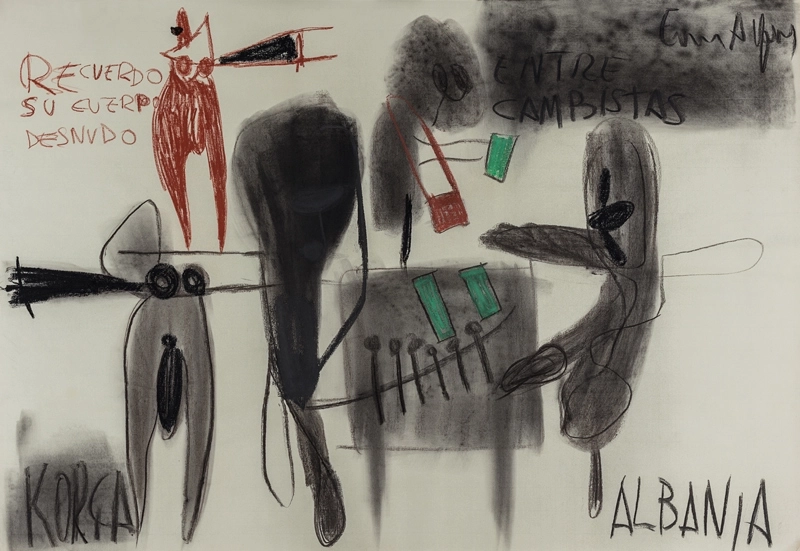
Entre cambistas, 1996
Charcoal and sanguine/paper, 70 x 100 cm
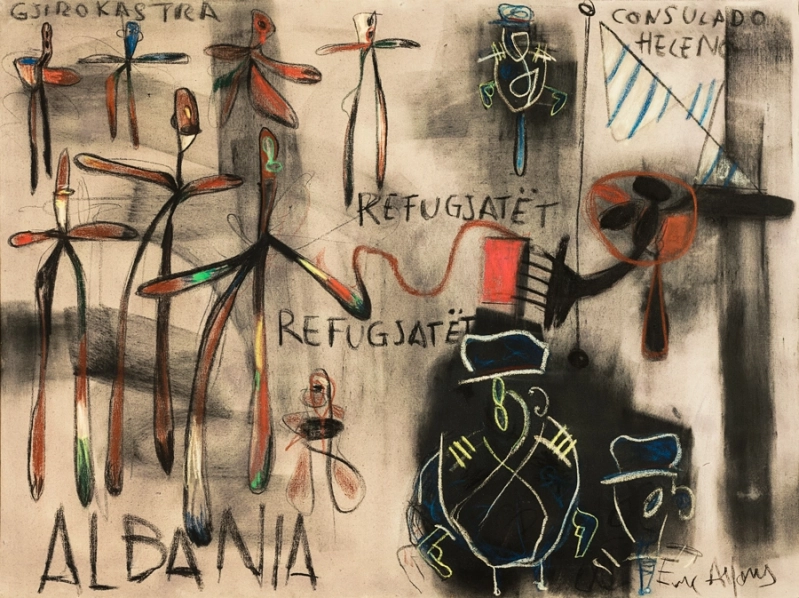
Refugtatët, 1996
Mixed media/canvas, 97 x 130 cm
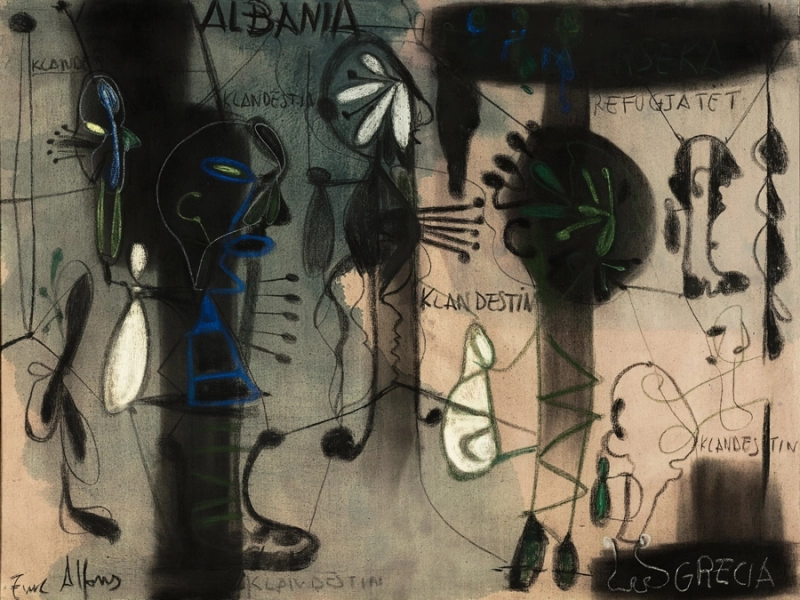
De Albania a Grecia, 1997
Mixed media/canvas, 97 x 130 cm
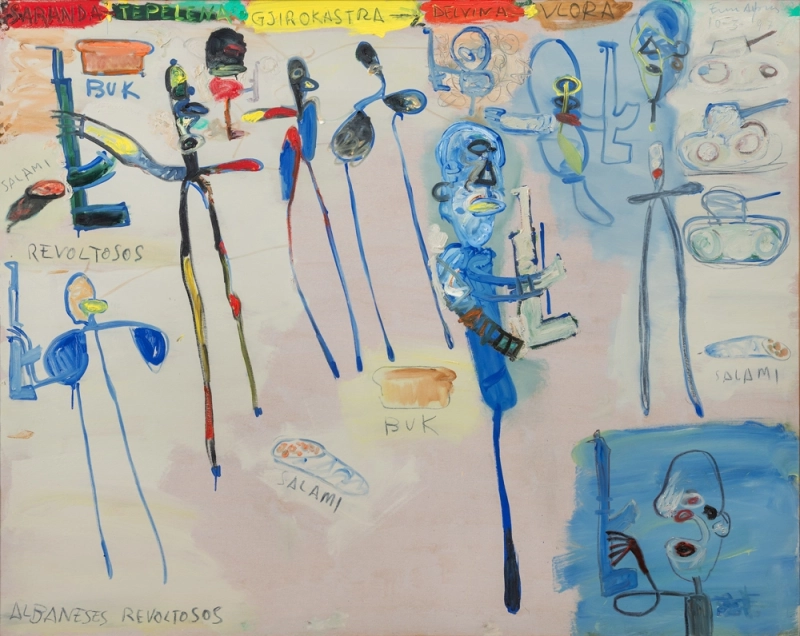
Albaneses revoltosos, 1997
Oil/canvas, 180 x 200 cm
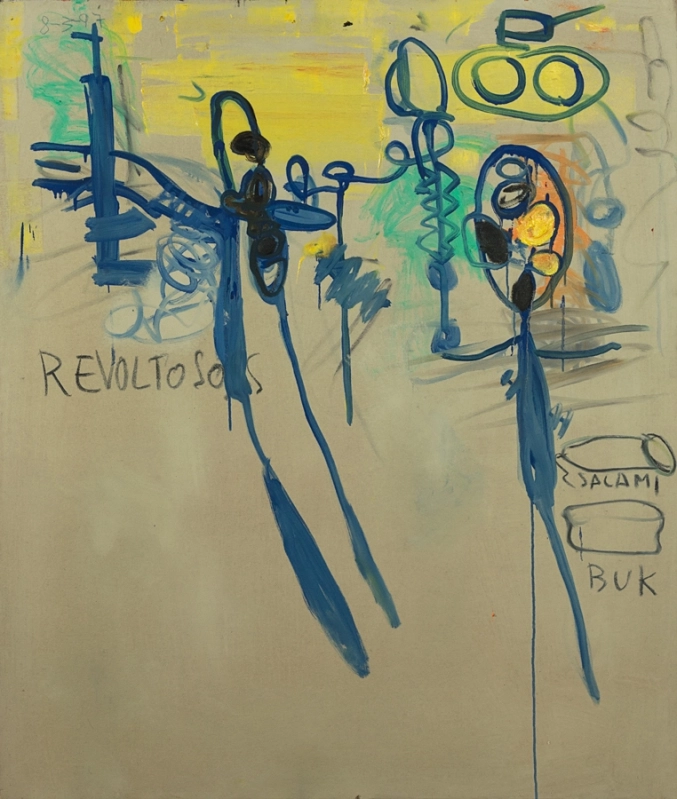
Untitled (Albaneses revoltosos), 1997
Oil/canvas, 130 x 110 cm
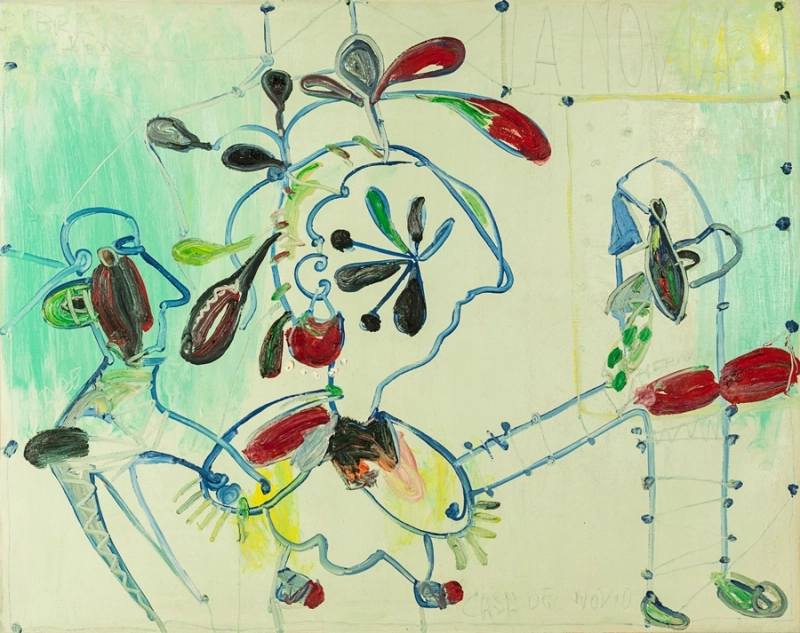
La novia, c.1998
Oil/canvas, 73 x 92 cm
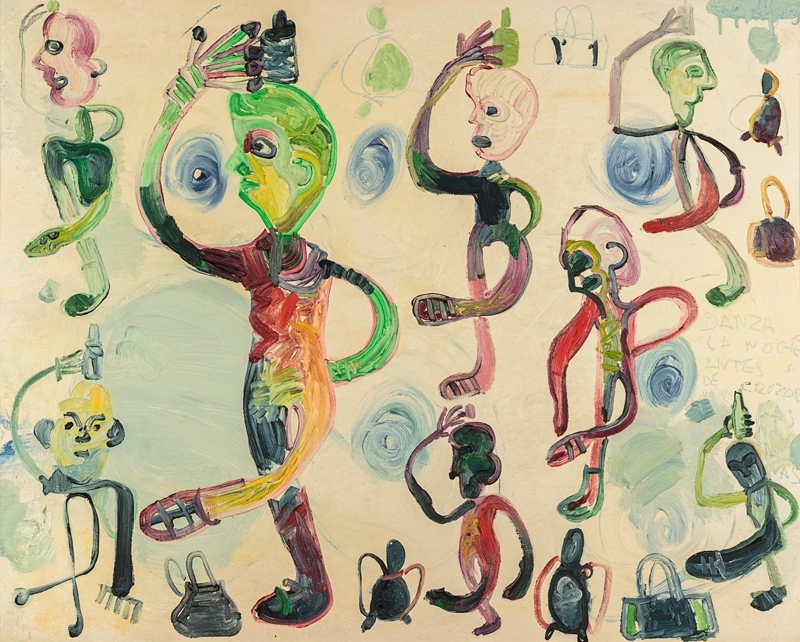
Danza la noche antes de cruzar la montaña, c.1997
Oil/canvas, 73 x 92 cm
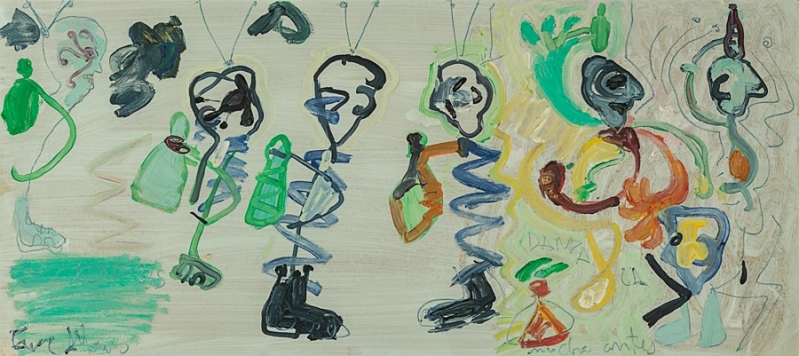
Untitled (Danza la noche antes de cruzar la montaña), c.1997
Oil/panel, 40 x 90 cm
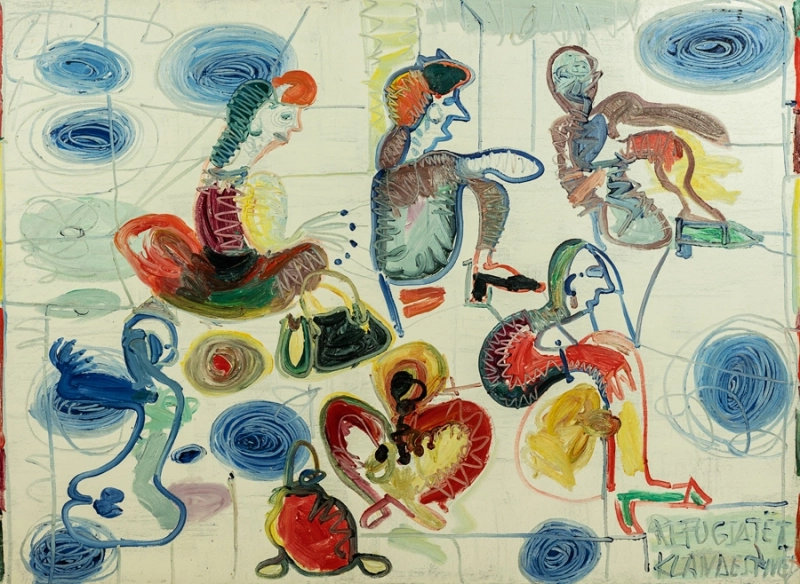
Albanesas, c.1997
Oil/canvas, 97 x 130 cm
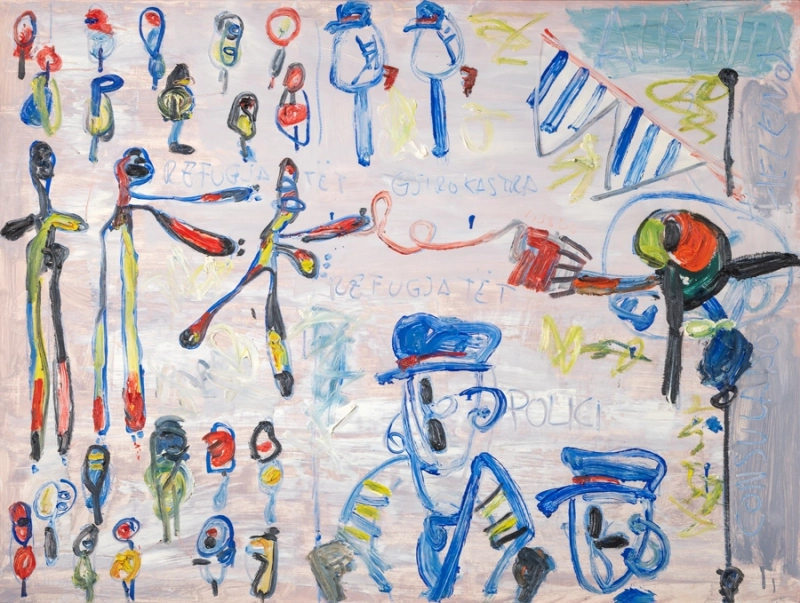
Refugjatët, 1997
Oil/panel, 92 x 120 cm
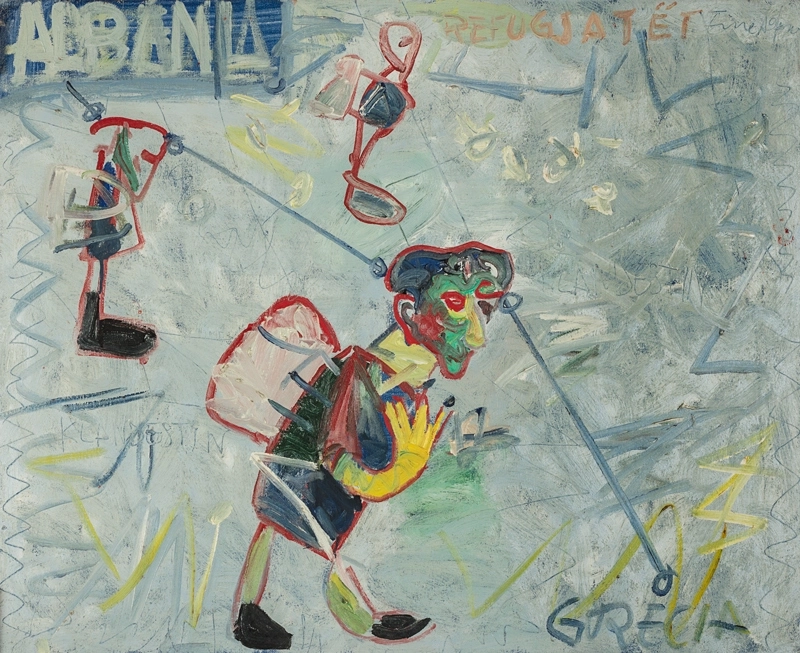
Untitled (Refugjatët), c.1997
Oil/canvas, 65 x 81 cm
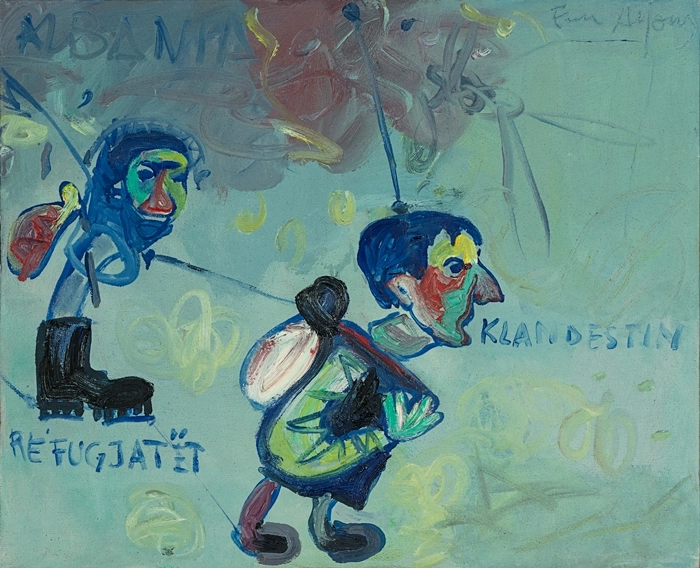
Untitled (Refugjatët), c.1997
Oil/canvas, 50 x 61 cm
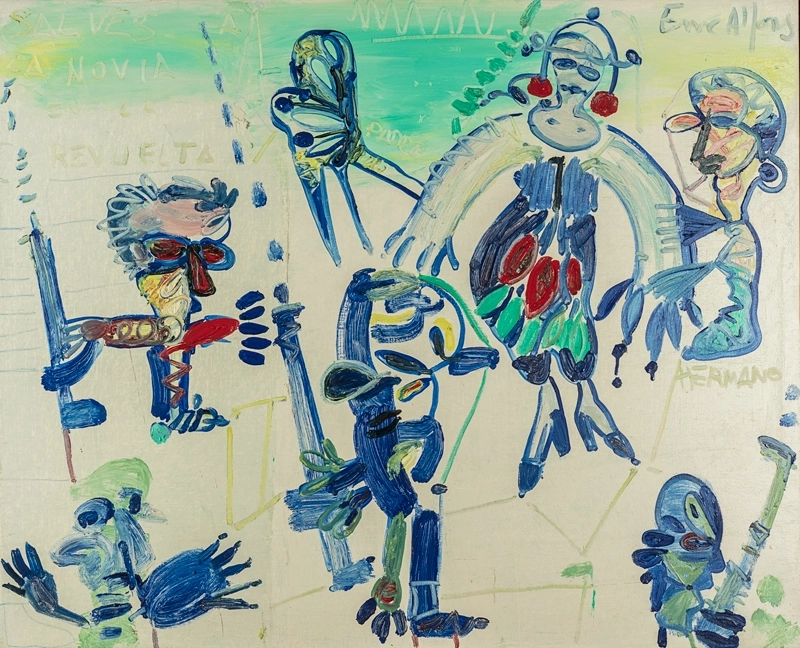
Salvas a la novia en la revuelta, 1998
Oil/canvas, 73 x 92 cm
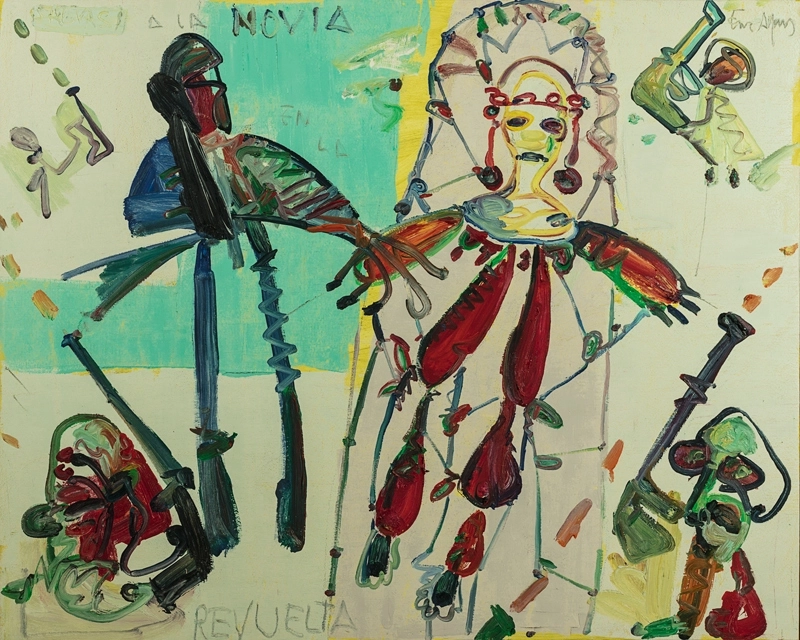
Salvas a la novia en la revuelta, 1998
Oil/canvas, 73 x 92 cm
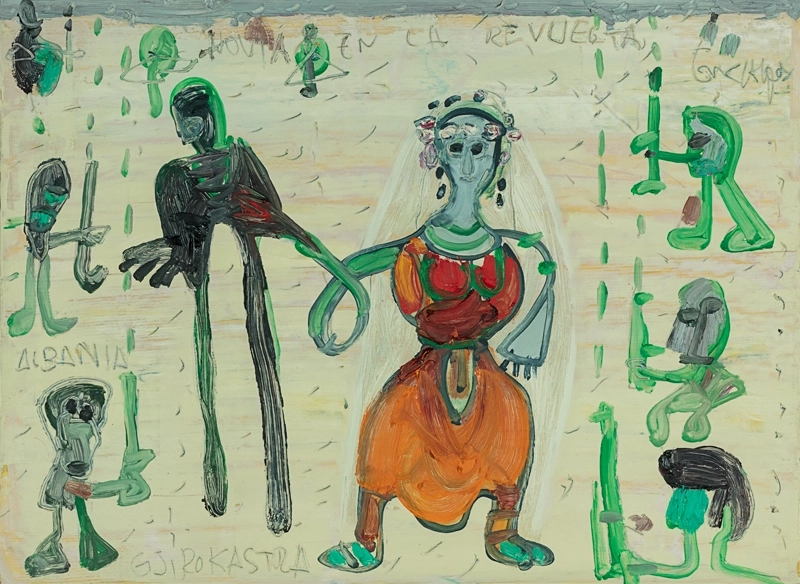
Salvas a la novia en la revuelta, 1998
Oil/panel, 38 x 52 cm
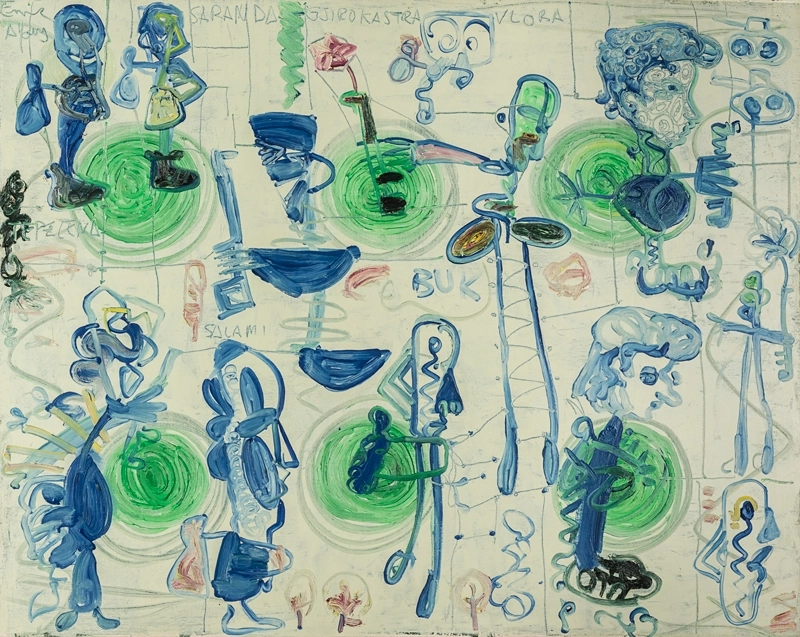
Untitled (Albaneses), 1998
Oil/canvas, 73 x 92 cm
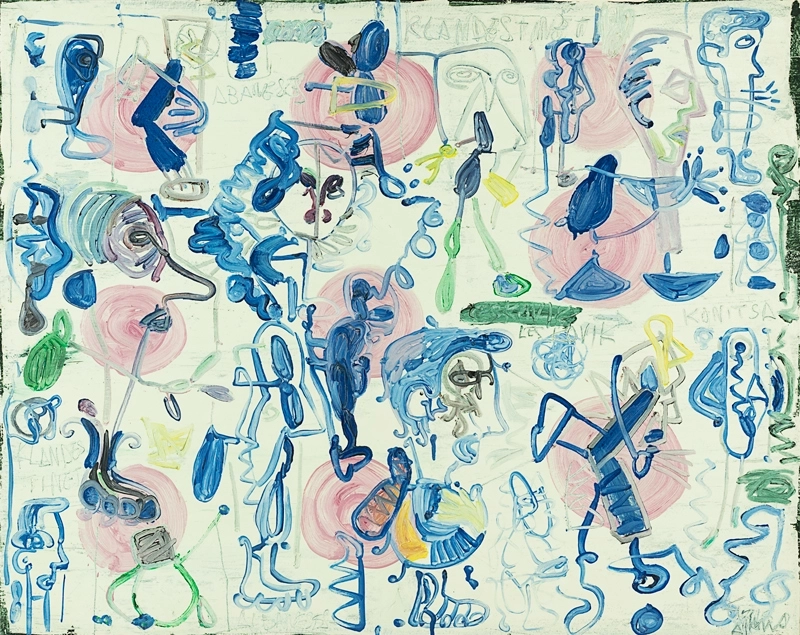
Untitled (Albaneses), 1998
Oil/canvas, 73 x 92 cm
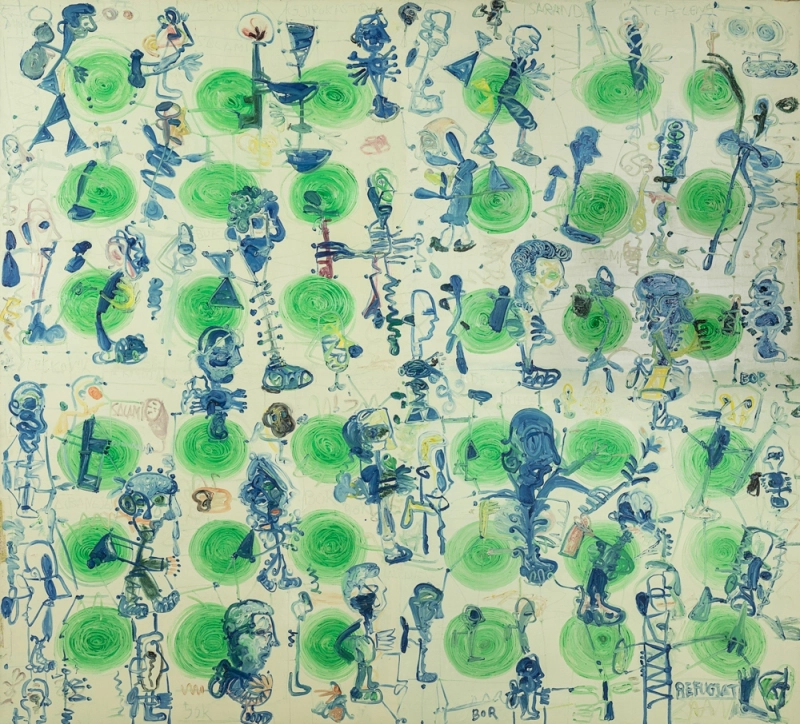
Refugjatët, 1998
Oil/canvas, 180 x 200 cm
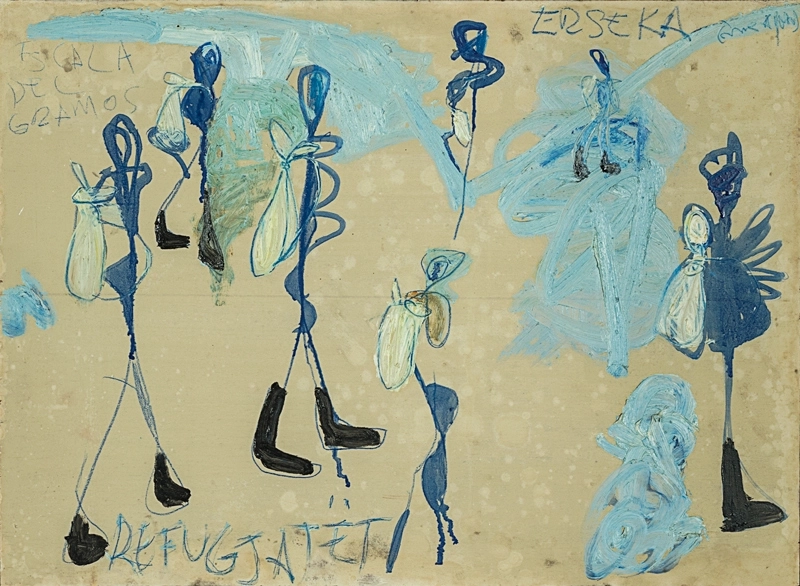
Untitled (Refugjatët), c.1997-1998
Oil/panel, 38 x 52 cm
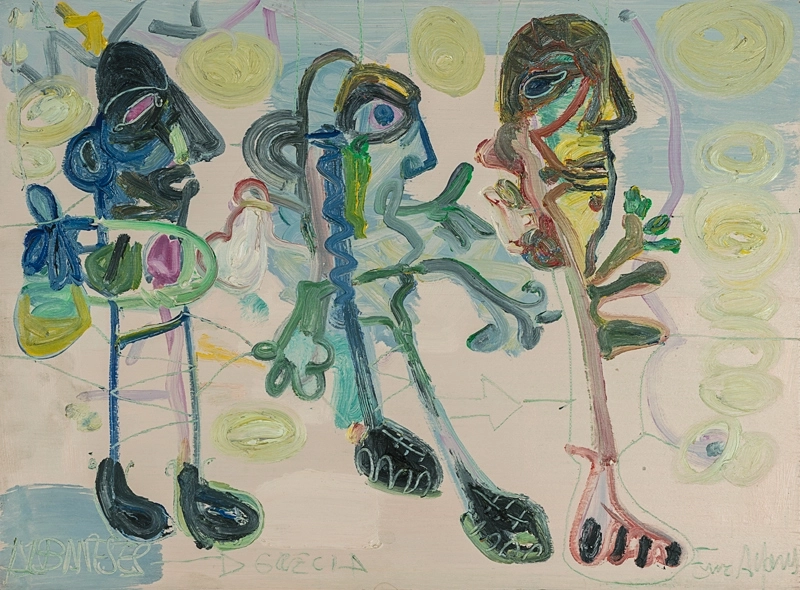
Untitled (Refugjatët), 1998
Oil/panel, 38 x 52 cm
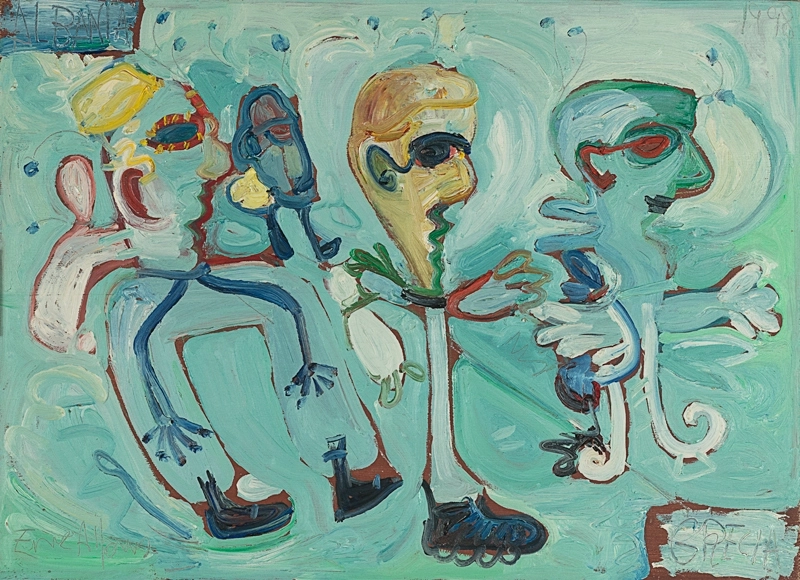
Untitled (Refugjatët), 1998
Oil/panel, 38 x 52 cm
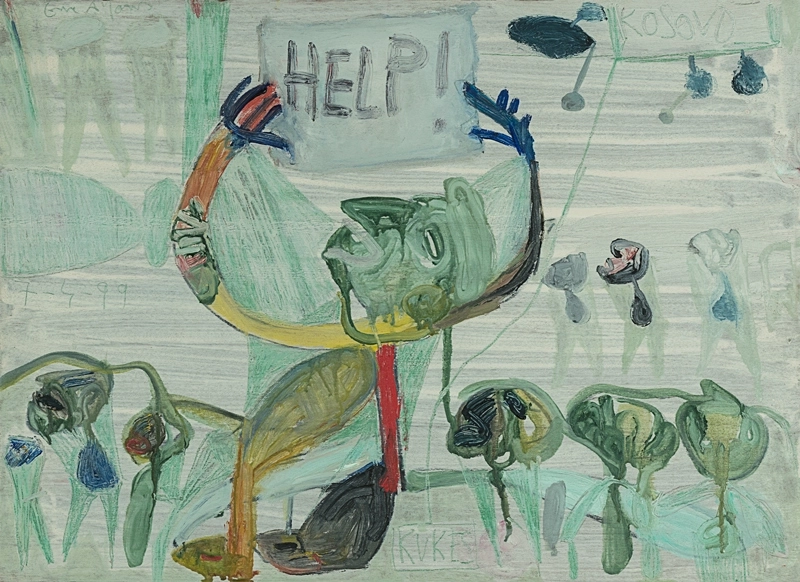
Untitled (Kosovo-Kukës), 1999
Oil/panel, 38 x 52 cm
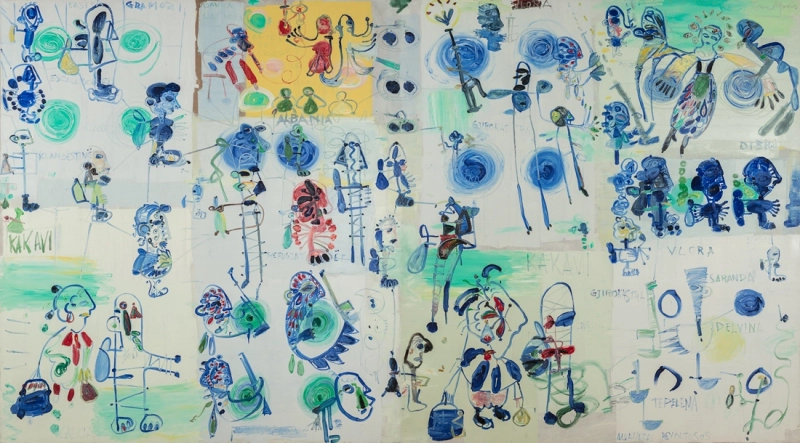
Albaneses, 1999. Diptych
Oil/canvas, 200 x 360 cm
