
References - Exhibition catalogues, solo and group shows (selected)
MALHAFA
Edition/year:
Galería El Ensanche
1989
Text:
Román de la Calle
Legal Deposit:
V. 2436-1989
Galería El Ensanche
1989
Text:
Román de la Calle
Legal Deposit:
V. 2436-1989
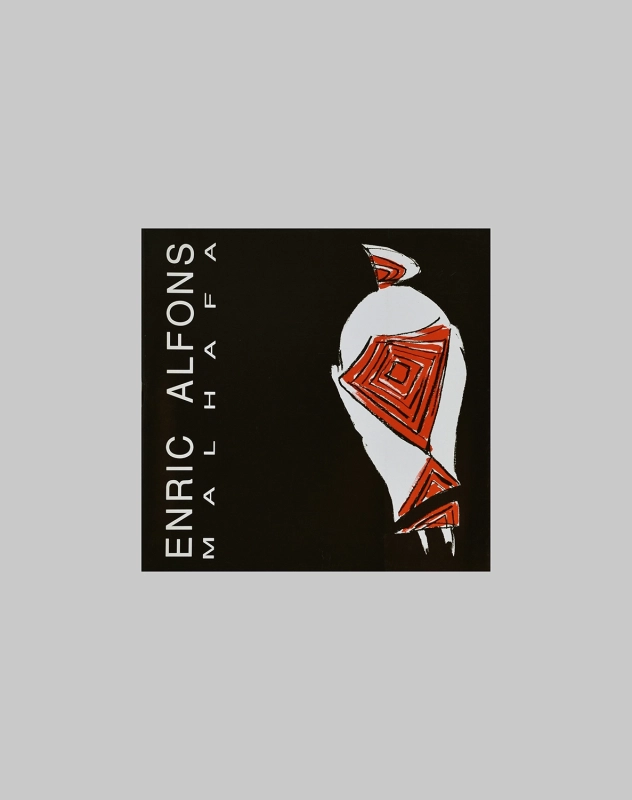
Catalogue for the exhibition Malhafa, held at the El Ensanche gallery in Valencia in October and November 1989.
It features both black-and-white and colour photographs of Alfons’s oil-on-canvas paintings, in both large and medium formats, created between 1986 and 1989. These works revolve around the theme of the malhafa, a type of brightly patterned veil that covers the body and head of women in the Sahara region.
The catalogue is accompanied by the text Cuando el malhafa prolonga la máscara [When the Malhafa Extends the Mask] by Román de la Calle, which analyses the evolution of Alfons’s painting ever since his first travels to the Arab world and its culture: from the Fetitxes series, through Deessa Màscara, and then Malhafa, the central focus of the exhibition and the subject of his in-depth critical study.
The critic views the three series, all born from this new perspective, as links in an artistic process around the leitmotif of the female figure, and anticipated—as indeed occurred—that the Malhafa series would mark the end of one cycle and the opening of a new horizon.
It features both black-and-white and colour photographs of Alfons’s oil-on-canvas paintings, in both large and medium formats, created between 1986 and 1989. These works revolve around the theme of the malhafa, a type of brightly patterned veil that covers the body and head of women in the Sahara region.
The catalogue is accompanied by the text Cuando el malhafa prolonga la máscara [When the Malhafa Extends the Mask] by Román de la Calle, which analyses the evolution of Alfons’s painting ever since his first travels to the Arab world and its culture: from the Fetitxes series, through Deessa Màscara, and then Malhafa, the central focus of the exhibition and the subject of his in-depth critical study.
The critic views the three series, all born from this new perspective, as links in an artistic process around the leitmotif of the female figure, and anticipated—as indeed occurred—that the Malhafa series would mark the end of one cycle and the opening of a new horizon.
