
Works by series
FETITXES ANDALUSÍS (1982), DEESSA MÀSCARA (1984), MALHAFA (1989)
1980s: Flight South. Search for the Authentic, Woman as Leitmotif, Strong Use of Colour.
See more
Moving beyond earlier stages in which his artistic activity split in two opposing directions: the market on one hand and, on the other, a path outlined by his political commitment. Following a profound personal crisis around 1978, Enric Alfons rethinks his entire creative work from scratch.
This turning point led him to recover the gestures and impulses of his student years, adopting, as he put it himself, an escapist and romantic attitude that materialized in a series of journeys to the south, beginning with a trip to Morocco, and an encounter with the Other that would decisively awaken in him a search for the authentic.
Fetitxes andalusís
This new perspective began to take shape in a series of works submitted for the first edition of the Alfons Roig Prize and grants in 1981, organized by the Provincial Council of Valencia to support the visual arts.
At the same time, these works were exhibited in the solo show Tafanejar, organized by the Town Council of Torrent as part of a project showcasing Masters and New Talents of Painting and Sculpture in the Valencian Region. The artist’s words in the handout for the exhibition reveal a deeply introspective creative process that oscillates between reflection and the irrational within his own world: “…fetitxe, tafaner/look, search/focus. Unconscious/rational and irrational/action I act/paint I paint…”
The professor, essayist and art critic Román de la Calle[1] [2] notes how those troubling “characters atop the fish stall” surprised the whole jury, of which he was a member, and moved them to unanimously award the grant to Alfons so that he could develop his proposed project, which stood out for what de la Calle described as “the singular expressive violence of the proposal.”
In May and June of 1982, the group exhibition New Painting from Valencia featuring Alfons’s fetitxes was held in New York, organized by the Spanish National Tourism Office.
In an article on the group show,[3] Román de la Calle emphasized a twofold introspection within Valencian artistic production: on an objective level, the elements of painting—paint, gesture, graphic marks, colour—become central concerns; and, on a subjective level, the artist’s individuality opens onto a “personal world” and the work projects an introspective worldview.
Along these same lines, the art historian Boye Llorens Peters[4] later pointed out that the goal of the new generation of artists emerging during the transción, Spain’s transition to democracy following Franco’s dictatorship, was to stir emotions and express the sincerity of a subjective gaze.
And, as pointed out earlier, it is within this reading that the fetitxes and the subsequent development of Alfons’s painting can be framed, always moving within the confines of the realm of subjectivity.
In November 1982, as part of the exhibition at Sala Parpalló showcasing works by the recipients of the Alfons Roig Prize, organized by the Provincial Council, Enric Alfons presented this series under the title Fetitxes andalusís [Andalusí Fetishes]. Román de la Calle underscored the hieratic quality of the compositions, the emphasis on distinctly feminine features and erotic symbols, all within a “warm and somewhat theatrical atmosphere, where it felt as though something were about to happen, despite the impassive stillness and waiting of the characters, half-hidden behind layers of clouds and veils.”
Deessa Màscara
Alfons visited North Africa on frequent occasions, in a series of journeys that culminated in 1983 with research trips to the mountainous Tassili plateau (Algeria) and the High Atlas in Morocco. During these trips, he conceived the work Deessa Màscara (Goddess Mask), exhibited in July 1984 at the Caixa de Pensions exhibition hall in Valencia, accompanied by texts penned by Ferran Cremades i Arlandis.[5] This work represents the eroticism and sensuality of women hidden behind veils and masks, in a game of attraction and seduction, enriched and deepened by a dual artistic language: the painter’s colour, form and composition, and the words and metaphors of Cremades’s poetic prose.
Once again, the chosen subject matter is woman, this time with her face covered by a veil, and the interplay of gazes. Juan Ángel Blasco Carrascosa[6] [7] claims that “Alfons began with the oval form in order to portray, inside it, the expressions of faces using warm colours drawn from Islamic rugs and tapestries. The final result is a gallery of portraits where fetishism, bold colourism and sensual passion are constant themes, linking them to his earlier work.”
For his part, Román de la Calle underscores the artist’s desire to portray the magic of a different world, which is rendered in the canvases in this series with a kind of primal intensity. He highlights, both in the core theme and the technique, the plasticity of the masks and the persistence of the gazes framed by the oval of the face, skilfully rendered through linear strokes and a number of elemental forms. The critic speaks of “a formal base of colour, striking and central to the work, […] with luminous chromaticism.”
Among the exhibitions featuring works from this series, in addition to those already mentioned, was a solo show at Galería Lucas in Gandía as well as several group exhibitions: the 4th Art Biennial of Oviedo (organized by the Town Council of Oviedo and the Museum of Fine Arts of Asturias); the first Valencia Art Show, with works from Fundació Caixa de Pensions and contributions by young artists from Catalonia and Valencia; and touring shows such as Contemporary Valencian Art and Contemporary Valencian Painters, held throughout 1986 and 1987 in several venues like the Lonja in Valencia and various towns in the provinces of Valencia, Alicante and Castellón.
Malhafa
The period from 1985 to 1990 was especially intense: teaching, a doctorate (1987) and more research trips, this time to the island of Djerba (Tunisia) and Western Sahara, where he carried out fieldwork. He used his annual vacation to expand his horizons further, traveling to Mauritania and Turkey. There he lived with local communities, immersed himself in their daily lives, rituals and customs, and was rejuvenated by values of friendship, family and community that still endured there.
Throughout 1988, 1989 and 1990, he made trips to Ifni, Western Sahara and Nouakchott (Mauritania), filling some thirty sketchbooks with scenes of daily life.
It is not surprising, then, that from this point on, his leitmotif—the female figure—appears in a different light: no longer as a fetish charged with eroticism rooted in evocation, but as the protagonist of everyday life, recorded in his sketchbooks with special attention to their attire: the malhafa, a boldly patterned veil that covers the head and body of women in the Saharan region. As Román de la Calle notes, “faces, hands or feet are thus reduced to the most minimal forms of representation.”
A shift or evolution can be seen between the earlier and later Malhafa works, the result of a process of synthesis: from a baroque treatment of the garment to the application of colour that suggests the form of the clothing and the female figure with minimal detail or adornment.
The key solo exhibitions of this period, under the title Malhafa, took place at Sala Rius in Carcaixent (October 1989) and at Galería El Ensanche in Valencia (October–November 1989).
Among the group exhibitions featuring works from this series, one notable example was held in August and September 1989 at the Mislata Cultural Centre, marking the centre’s inauguration.
[1] https://catunescoforum.upv.es/mision-y-objetivos/equipo/roman-de-la-calle/
[2] Román de la Calle, “Cuando el Malhafa prolonga la máscara” in catalogue for the exhibition “Malhafa” at Galería Ensanche. Valencia, October-November 1989.
[3] Román de la Calle, “Pintura valenciana en New York” in Las Provincias, 24 June 1982.
[4] Boye Llorens Peters, curator’s essay in the catalogue for the exhibition “Enric Alfons. Viajar, conocer, pintar,” published by the Town Council of Cullera, 2018.
[5] The exhibition was accompanied by a catalogue published by Fundació Caixa de Pensions, Deessa Màscara, Enric Alfons/Cremades i Arlandis. Further details in the ‘References’ section.
[6] PhD in Philosophy and Education Sciences from the University of Valencia, PhD in Fine Arts from the Polytechnic University of Valencia, and art critic.
[7] Juan Ángel Blasco Carrascosa, “Máscaras africanas en la pintura de Enric Alfons” in CIMAL Cuadernos de cultura artística, no. 24, 1984.
This turning point led him to recover the gestures and impulses of his student years, adopting, as he put it himself, an escapist and romantic attitude that materialized in a series of journeys to the south, beginning with a trip to Morocco, and an encounter with the Other that would decisively awaken in him a search for the authentic.
Fetitxes andalusís
This new perspective began to take shape in a series of works submitted for the first edition of the Alfons Roig Prize and grants in 1981, organized by the Provincial Council of Valencia to support the visual arts.
At the same time, these works were exhibited in the solo show Tafanejar, organized by the Town Council of Torrent as part of a project showcasing Masters and New Talents of Painting and Sculpture in the Valencian Region. The artist’s words in the handout for the exhibition reveal a deeply introspective creative process that oscillates between reflection and the irrational within his own world: “…fetitxe, tafaner/look, search/focus. Unconscious/rational and irrational/action I act/paint I paint…”
The professor, essayist and art critic Román de la Calle[1] [2] notes how those troubling “characters atop the fish stall” surprised the whole jury, of which he was a member, and moved them to unanimously award the grant to Alfons so that he could develop his proposed project, which stood out for what de la Calle described as “the singular expressive violence of the proposal.”
In May and June of 1982, the group exhibition New Painting from Valencia featuring Alfons’s fetitxes was held in New York, organized by the Spanish National Tourism Office.
In an article on the group show,[3] Román de la Calle emphasized a twofold introspection within Valencian artistic production: on an objective level, the elements of painting—paint, gesture, graphic marks, colour—become central concerns; and, on a subjective level, the artist’s individuality opens onto a “personal world” and the work projects an introspective worldview.
Along these same lines, the art historian Boye Llorens Peters[4] later pointed out that the goal of the new generation of artists emerging during the transción, Spain’s transition to democracy following Franco’s dictatorship, was to stir emotions and express the sincerity of a subjective gaze.
And, as pointed out earlier, it is within this reading that the fetitxes and the subsequent development of Alfons’s painting can be framed, always moving within the confines of the realm of subjectivity.
In November 1982, as part of the exhibition at Sala Parpalló showcasing works by the recipients of the Alfons Roig Prize, organized by the Provincial Council, Enric Alfons presented this series under the title Fetitxes andalusís [Andalusí Fetishes]. Román de la Calle underscored the hieratic quality of the compositions, the emphasis on distinctly feminine features and erotic symbols, all within a “warm and somewhat theatrical atmosphere, where it felt as though something were about to happen, despite the impassive stillness and waiting of the characters, half-hidden behind layers of clouds and veils.”
Deessa Màscara
Alfons visited North Africa on frequent occasions, in a series of journeys that culminated in 1983 with research trips to the mountainous Tassili plateau (Algeria) and the High Atlas in Morocco. During these trips, he conceived the work Deessa Màscara (Goddess Mask), exhibited in July 1984 at the Caixa de Pensions exhibition hall in Valencia, accompanied by texts penned by Ferran Cremades i Arlandis.[5] This work represents the eroticism and sensuality of women hidden behind veils and masks, in a game of attraction and seduction, enriched and deepened by a dual artistic language: the painter’s colour, form and composition, and the words and metaphors of Cremades’s poetic prose.
Once again, the chosen subject matter is woman, this time with her face covered by a veil, and the interplay of gazes. Juan Ángel Blasco Carrascosa[6] [7] claims that “Alfons began with the oval form in order to portray, inside it, the expressions of faces using warm colours drawn from Islamic rugs and tapestries. The final result is a gallery of portraits where fetishism, bold colourism and sensual passion are constant themes, linking them to his earlier work.”
For his part, Román de la Calle underscores the artist’s desire to portray the magic of a different world, which is rendered in the canvases in this series with a kind of primal intensity. He highlights, both in the core theme and the technique, the plasticity of the masks and the persistence of the gazes framed by the oval of the face, skilfully rendered through linear strokes and a number of elemental forms. The critic speaks of “a formal base of colour, striking and central to the work, […] with luminous chromaticism.”
Among the exhibitions featuring works from this series, in addition to those already mentioned, was a solo show at Galería Lucas in Gandía as well as several group exhibitions: the 4th Art Biennial of Oviedo (organized by the Town Council of Oviedo and the Museum of Fine Arts of Asturias); the first Valencia Art Show, with works from Fundació Caixa de Pensions and contributions by young artists from Catalonia and Valencia; and touring shows such as Contemporary Valencian Art and Contemporary Valencian Painters, held throughout 1986 and 1987 in several venues like the Lonja in Valencia and various towns in the provinces of Valencia, Alicante and Castellón.
Malhafa
The period from 1985 to 1990 was especially intense: teaching, a doctorate (1987) and more research trips, this time to the island of Djerba (Tunisia) and Western Sahara, where he carried out fieldwork. He used his annual vacation to expand his horizons further, traveling to Mauritania and Turkey. There he lived with local communities, immersed himself in their daily lives, rituals and customs, and was rejuvenated by values of friendship, family and community that still endured there.
Throughout 1988, 1989 and 1990, he made trips to Ifni, Western Sahara and Nouakchott (Mauritania), filling some thirty sketchbooks with scenes of daily life.
It is not surprising, then, that from this point on, his leitmotif—the female figure—appears in a different light: no longer as a fetish charged with eroticism rooted in evocation, but as the protagonist of everyday life, recorded in his sketchbooks with special attention to their attire: the malhafa, a boldly patterned veil that covers the head and body of women in the Saharan region. As Román de la Calle notes, “faces, hands or feet are thus reduced to the most minimal forms of representation.”
A shift or evolution can be seen between the earlier and later Malhafa works, the result of a process of synthesis: from a baroque treatment of the garment to the application of colour that suggests the form of the clothing and the female figure with minimal detail or adornment.
The key solo exhibitions of this period, under the title Malhafa, took place at Sala Rius in Carcaixent (October 1989) and at Galería El Ensanche in Valencia (October–November 1989).
Among the group exhibitions featuring works from this series, one notable example was held in August and September 1989 at the Mislata Cultural Centre, marking the centre’s inauguration.
[1] https://catunescoforum.upv.es/mision-y-objetivos/equipo/roman-de-la-calle/
[2] Román de la Calle, “Cuando el Malhafa prolonga la máscara” in catalogue for the exhibition “Malhafa” at Galería Ensanche. Valencia, October-November 1989.
[3] Román de la Calle, “Pintura valenciana en New York” in Las Provincias, 24 June 1982.
[4] Boye Llorens Peters, curator’s essay in the catalogue for the exhibition “Enric Alfons. Viajar, conocer, pintar,” published by the Town Council of Cullera, 2018.
[5] The exhibition was accompanied by a catalogue published by Fundació Caixa de Pensions, Deessa Màscara, Enric Alfons/Cremades i Arlandis. Further details in the ‘References’ section.
[6] PhD in Philosophy and Education Sciences from the University of Valencia, PhD in Fine Arts from the Polytechnic University of Valencia, and art critic.
[7] Juan Ángel Blasco Carrascosa, “Máscaras africanas en la pintura de Enric Alfons” in CIMAL Cuadernos de cultura artística, no. 24, 1984.
Fetitxes
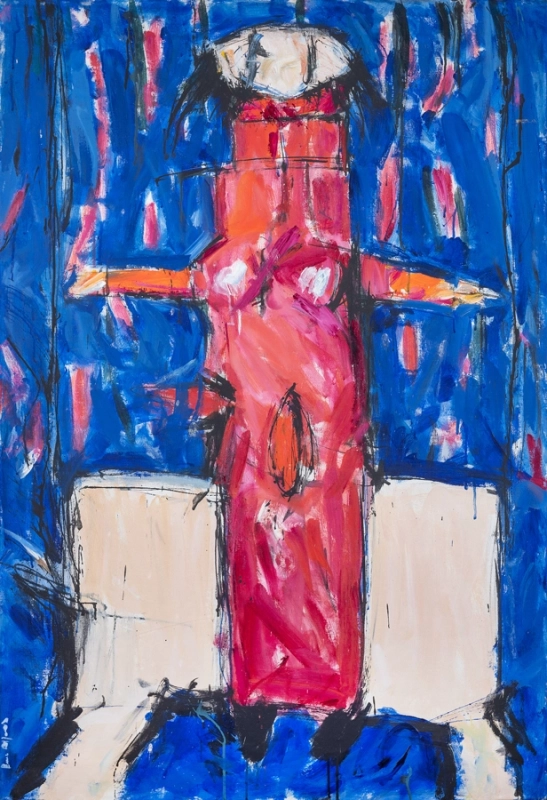
Untitled (Fetitxe), c.1981
Oil/canvas, 130 x 89 cm
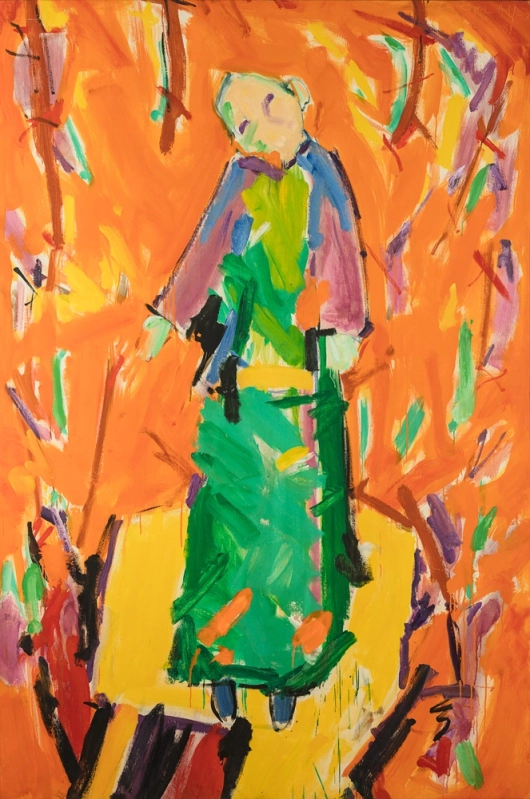
Untitled (Fetitxe), 1981
Oil/canvas, 195 x 130 cm
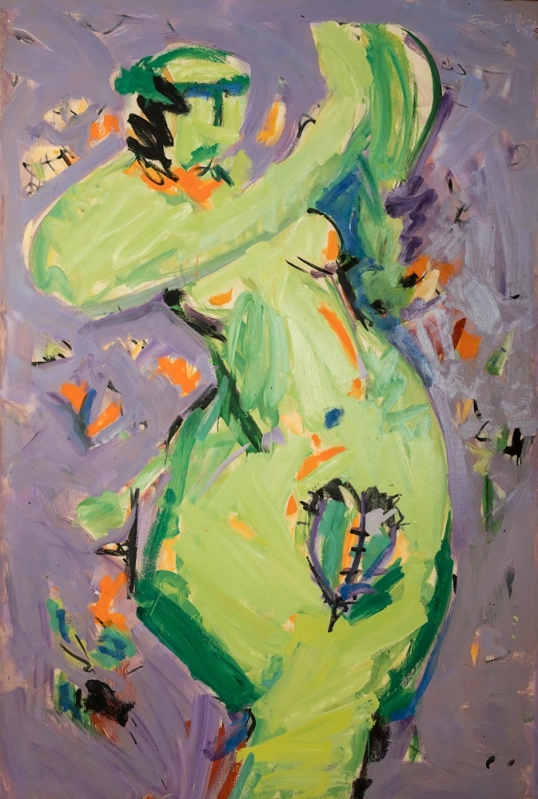
Untitled (Fetitxe), 1981
Oil/canvas, 200 x 135 cm
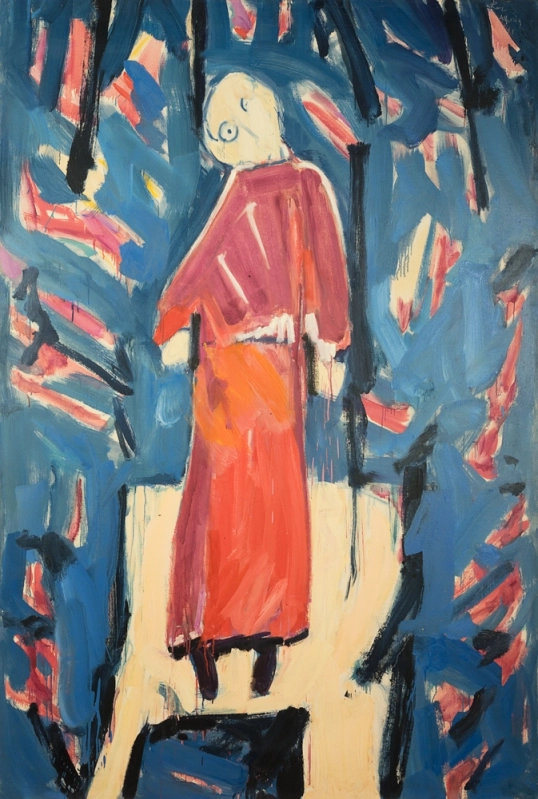
Untitled (Fetitxe), 1981
Oil/canvas, 200 x 135 cm
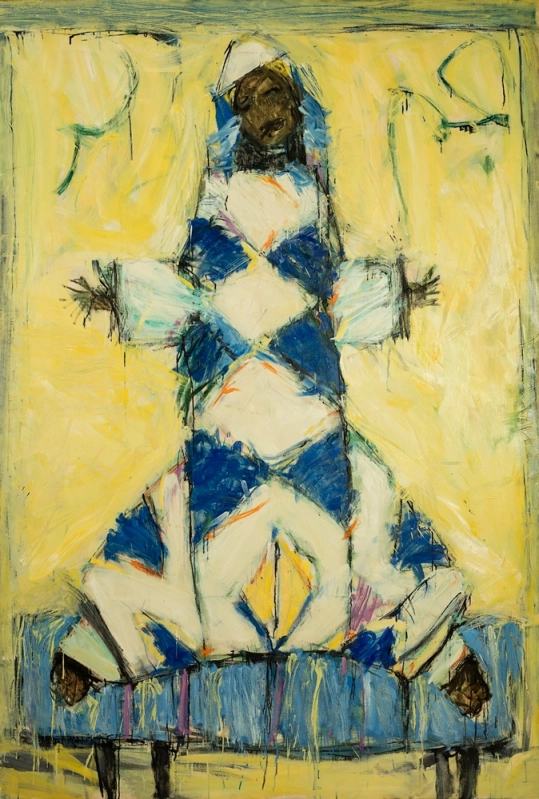
Fetitxe andalusí, 1982
Oil/canvas, 200 x 135 cm
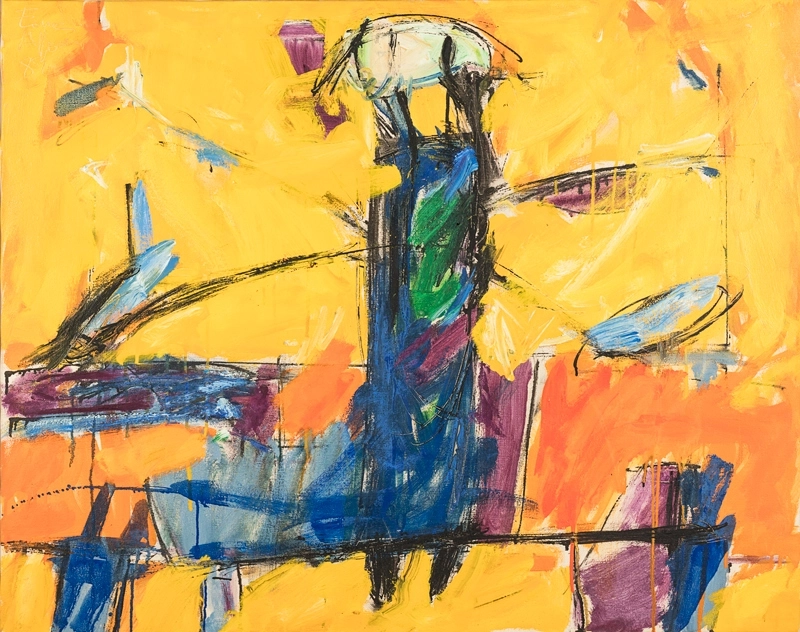
Untitled (Fetitxe), 1982
Oil/canvas, 73 x 92 cm
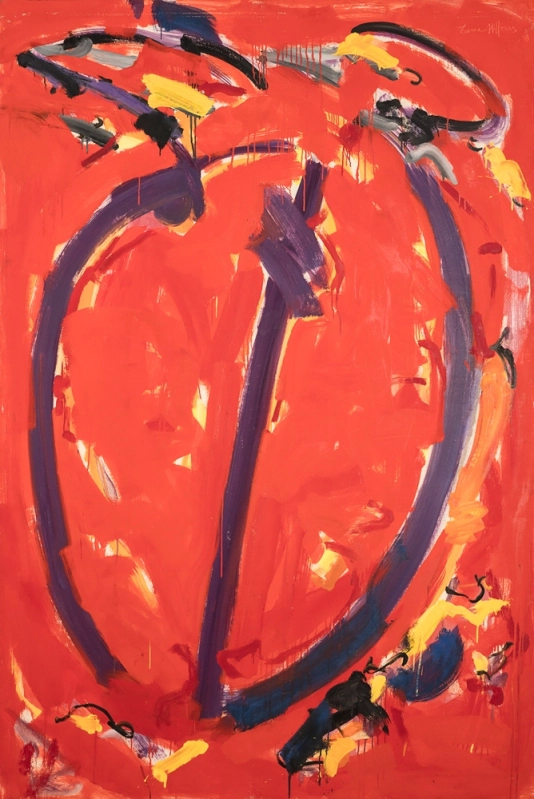
Untitled (the series Fetitxe), 1982
Oil/canvas, 200 x 130 cm
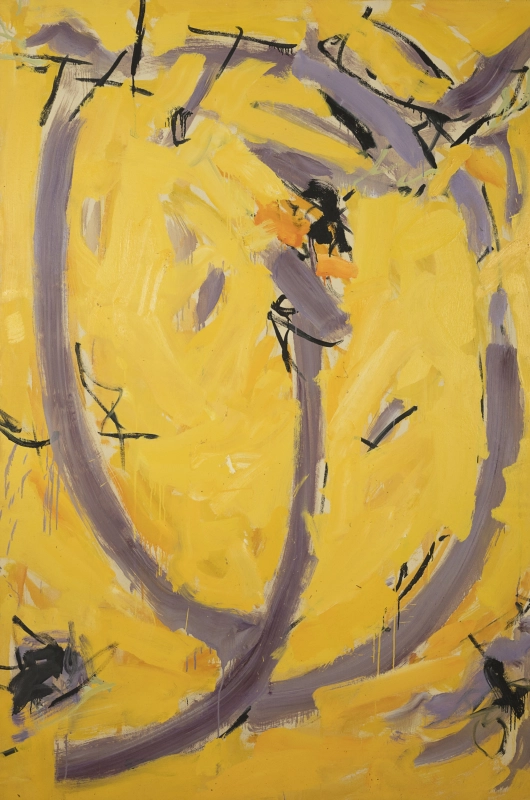
Untitled (the series Fetitxe), 1982
Oil/canvas, 200 x 130 cm
Máscaras
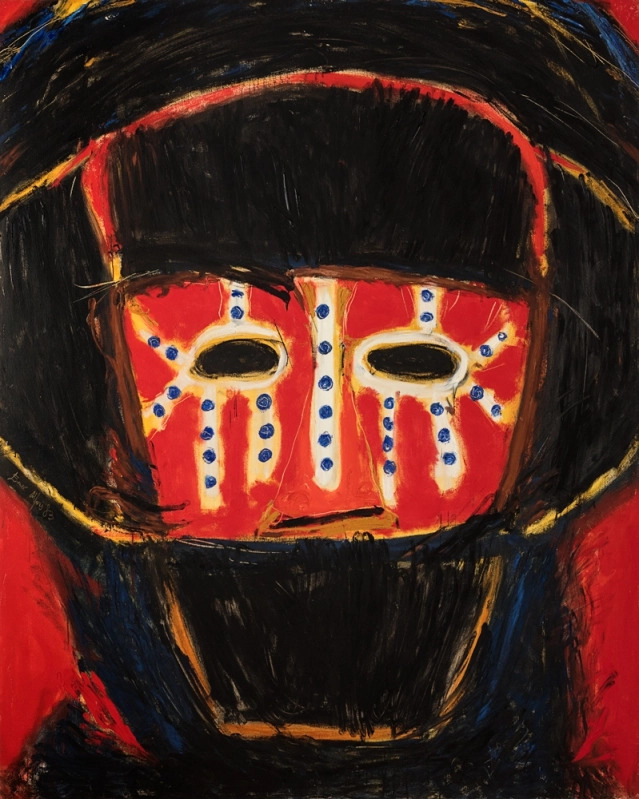
Tatuatge, 1983
Oil/canvas, 200 x 160 cm
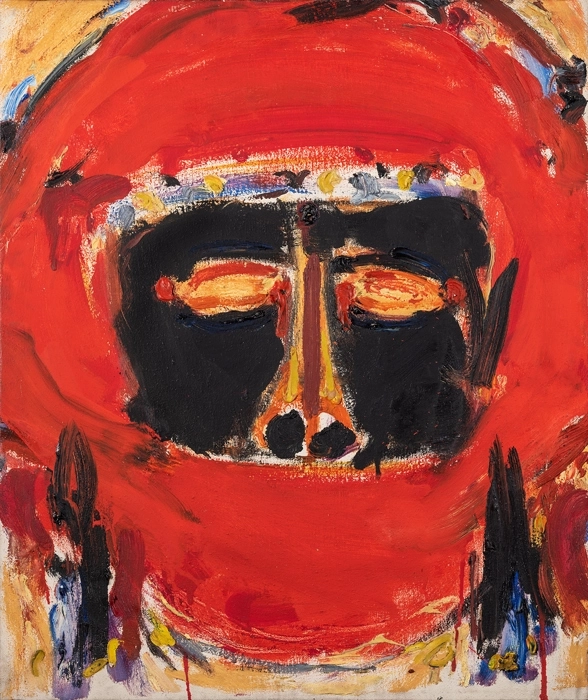
Untitled (Deessa Màscara), c.1984
Oil/canvas, 65 x 54 cm
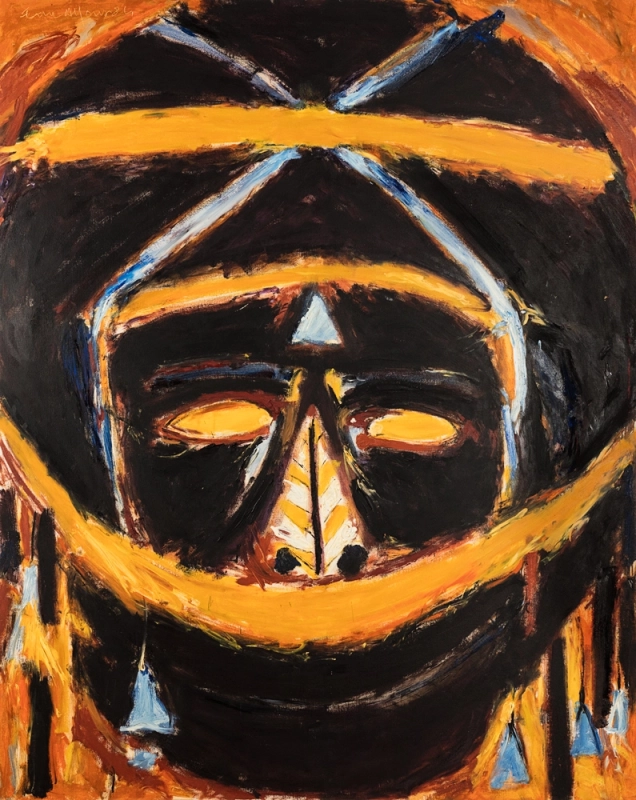
Sourire Jaune, 1984
Oil/canvas, 200 x 160 cm
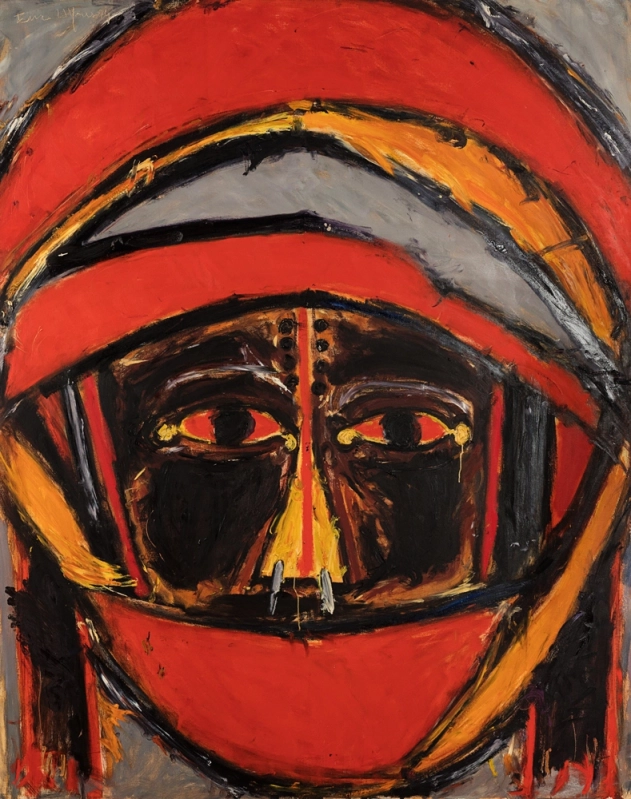
Toulmine-Masc, 1984
Oil/canvas, 200 x 160 cm
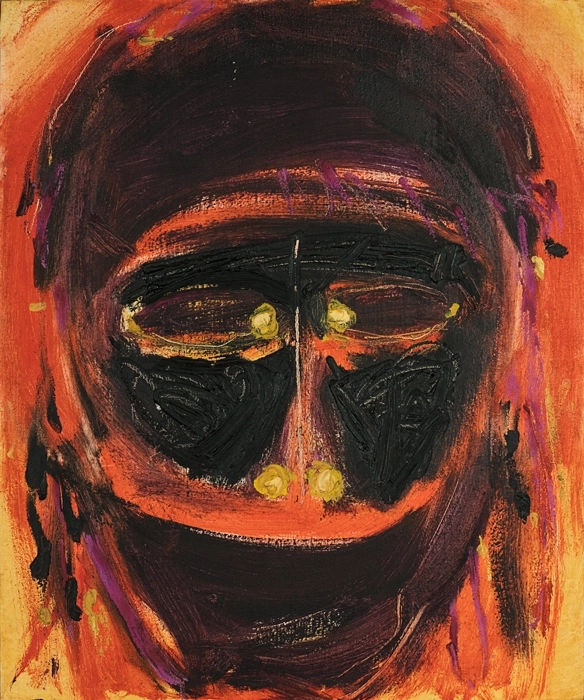
Toulmine-Masc IV, 1984
Oil/canvas, 65 x 54 cm
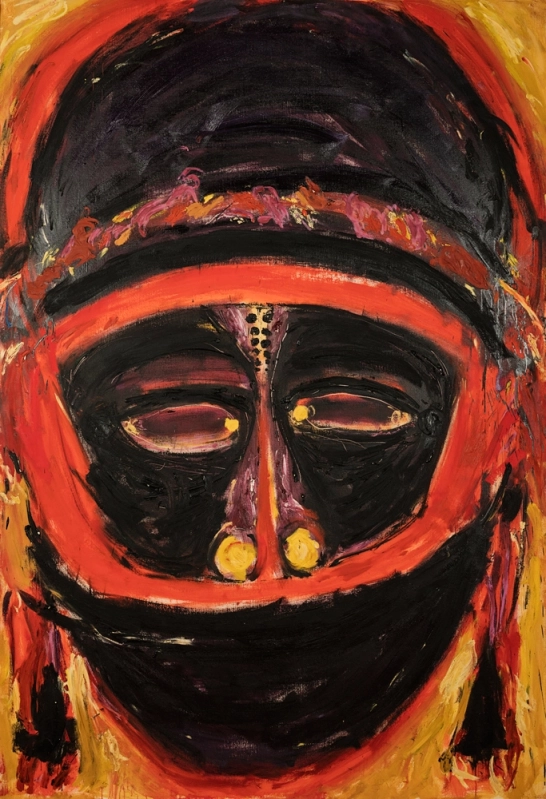
Untitled (Deessa Màscara), c.1984
Oil/canvas, 200 x 135 cm
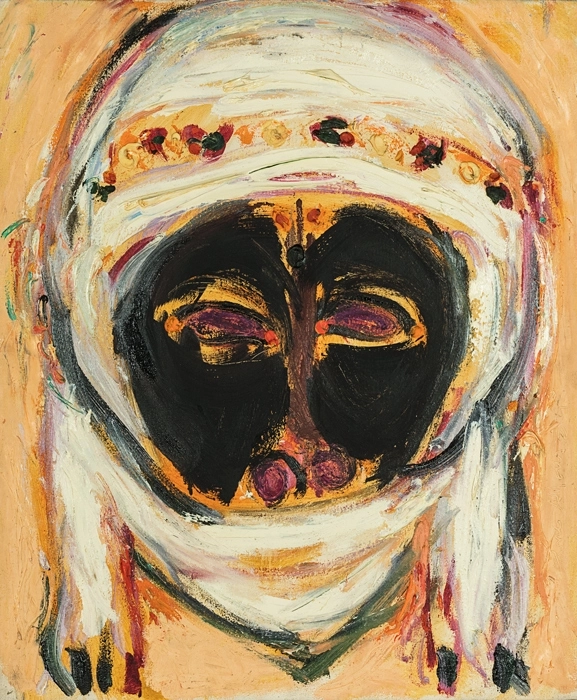
Untitled (Deessa Máscara), c.1984
Oil/canvas, 65 x 54 cm
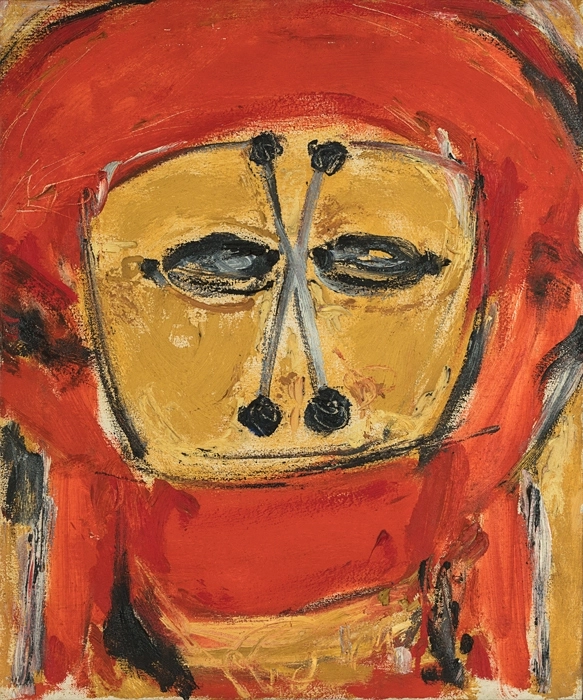
Untitled (Deessa Màscara), c.1984
Oil/canvas, 65 x 54 cm
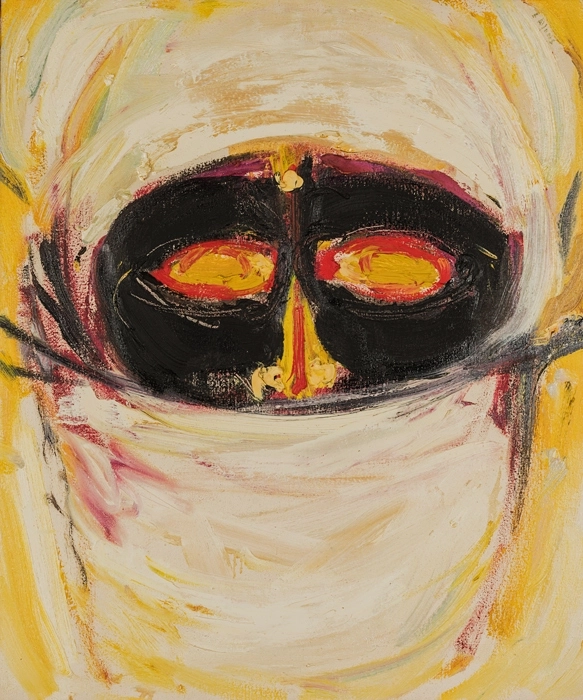
Untitled (Deessa Màscara), c.1984
Oil/canvas, 65 x 54 cm
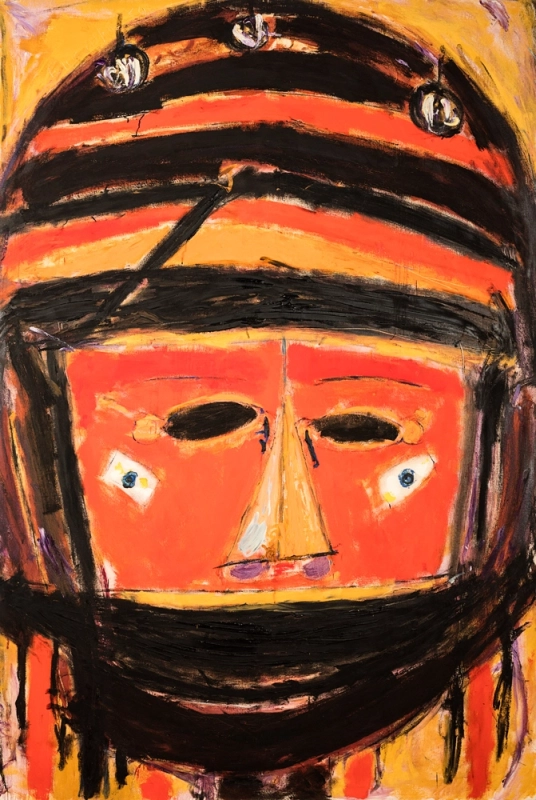
Aisha, 1984
Oil/canvas, 200 x 135 cm
Malhafas
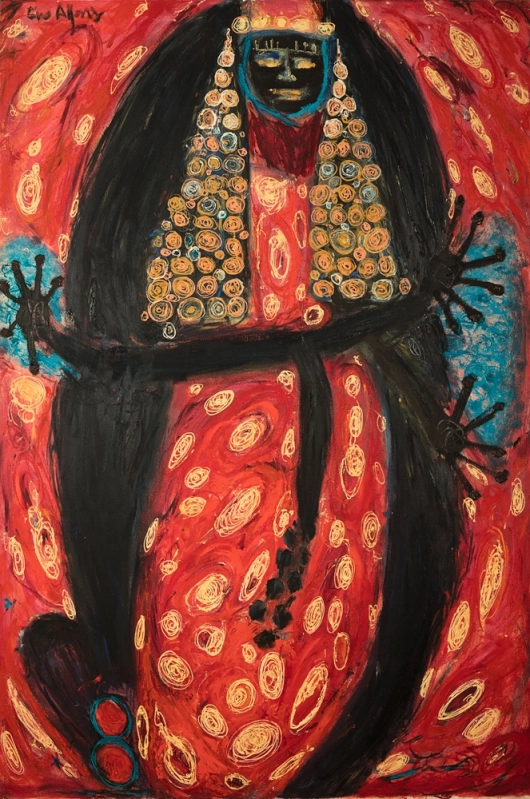
Untitled (Malhafa), c.1986
Oil/canvas, 200 x 135 cm
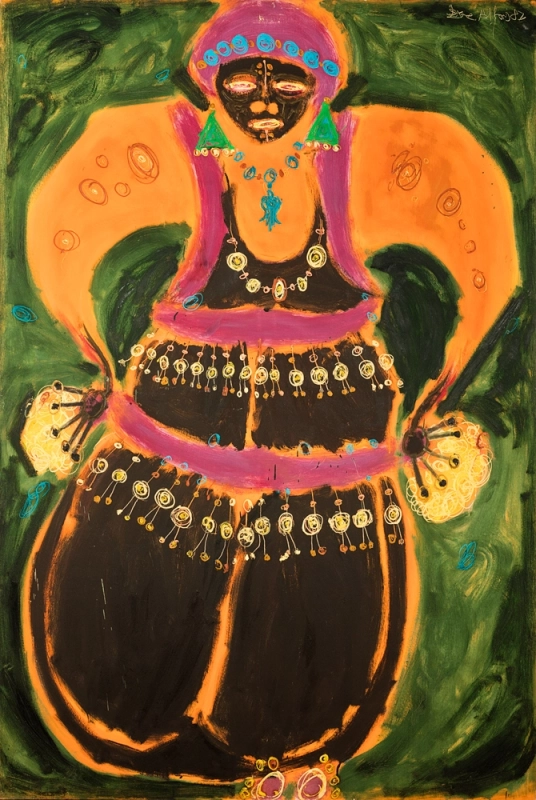
Untitled (Malhafa), 1987
Oil/canvas, 200 x 135 cm
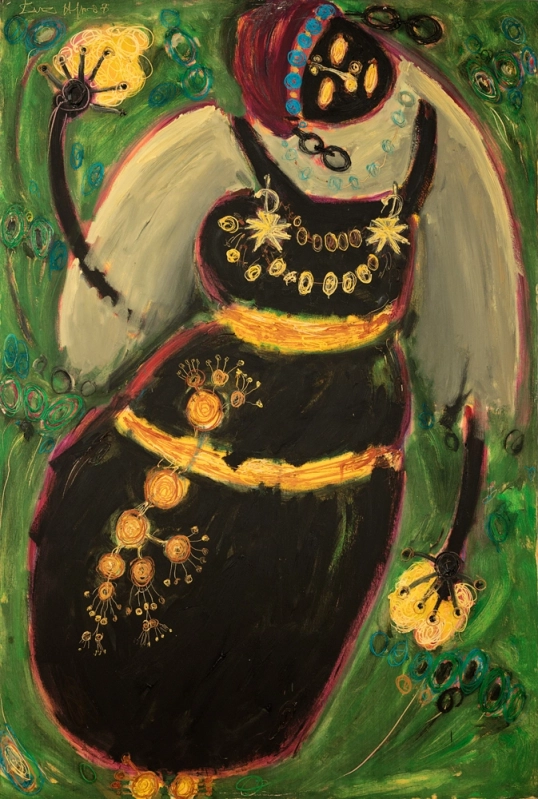
Untitled (Bailarina), 1987
Oil/canvas, 200 x 135 cm
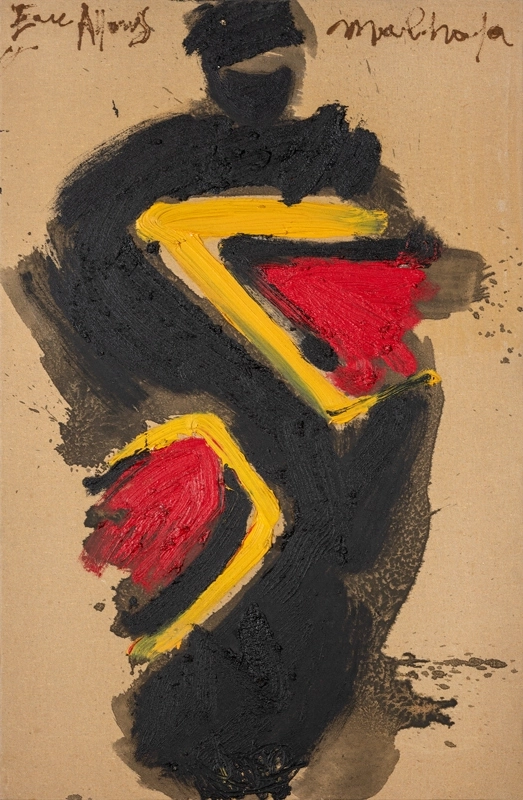
Untitled (Malhafa), 1988
Oil/canvas, 100 x 65 cm
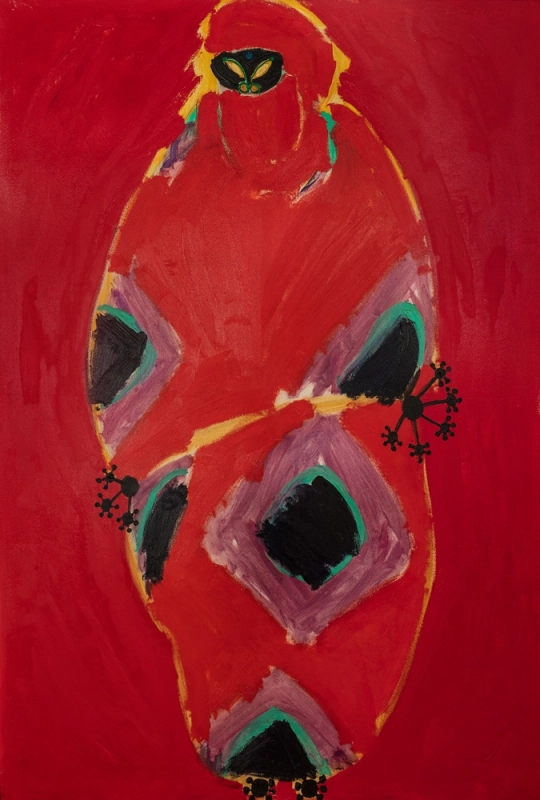
Untitled (Malhafa), 1988
Oil/canvas, 200 x 135 cm
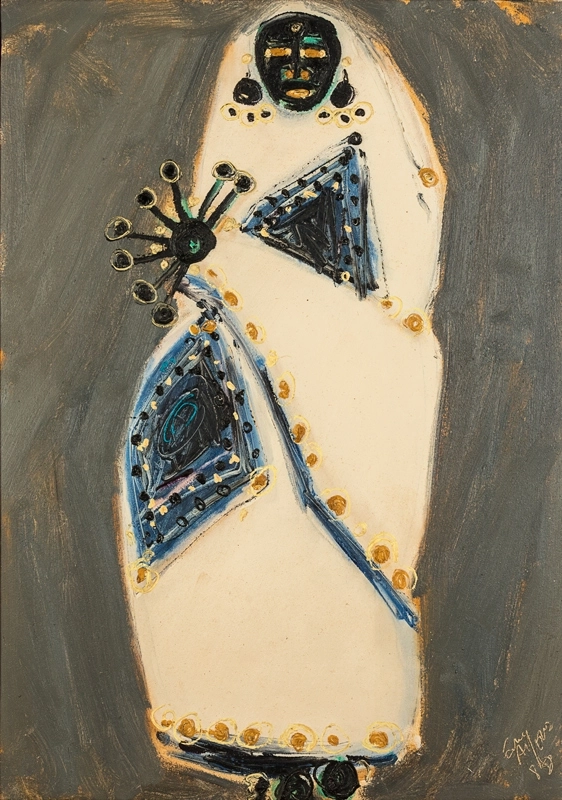
Untitled (Malhafa), 1988
Oil/canvas, 92 x 65 cm
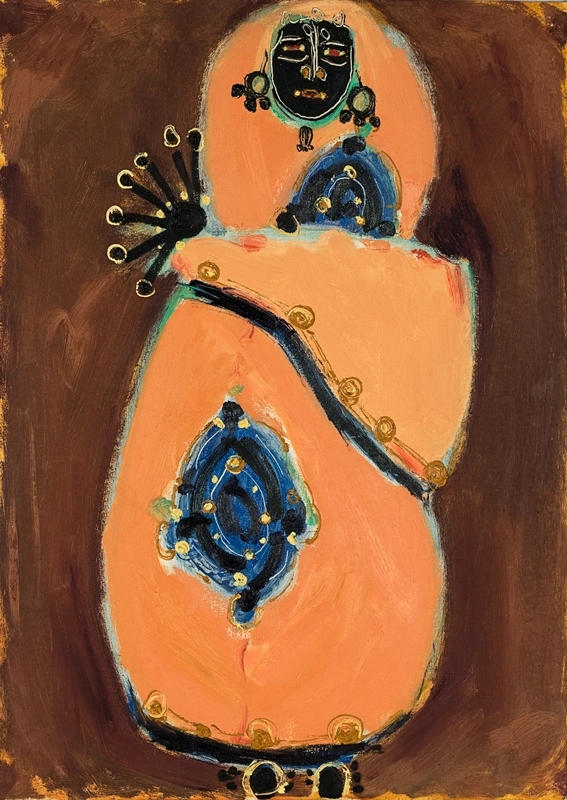
Untitled (Malhafa),, c.1988
Oil/canvas, 92 x 65 cm
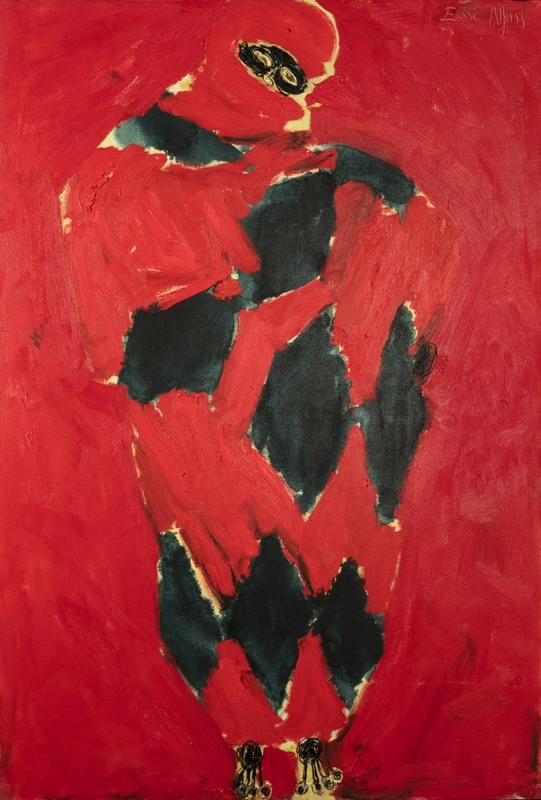
Untitled (Malhafa), c.1989
Oil/canvas, 200 x 135 cm
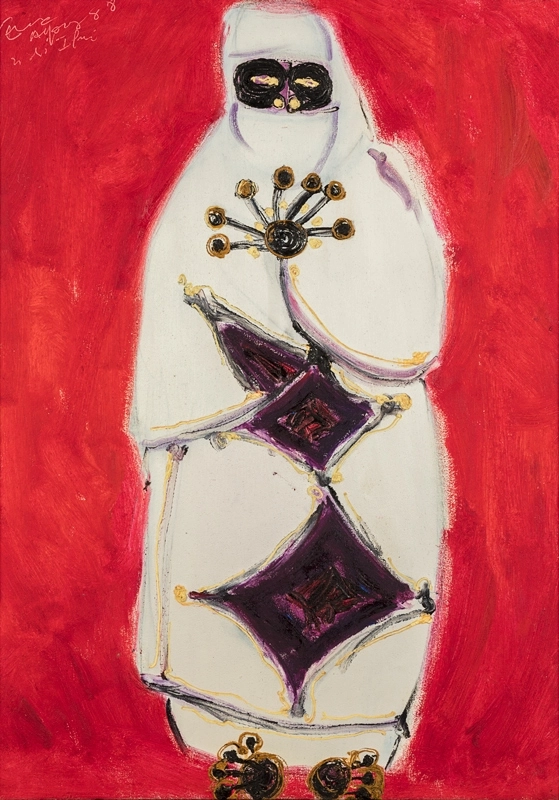
Untitled (Malhafa), 1988
Oil/canvas, 92 x 65 cm
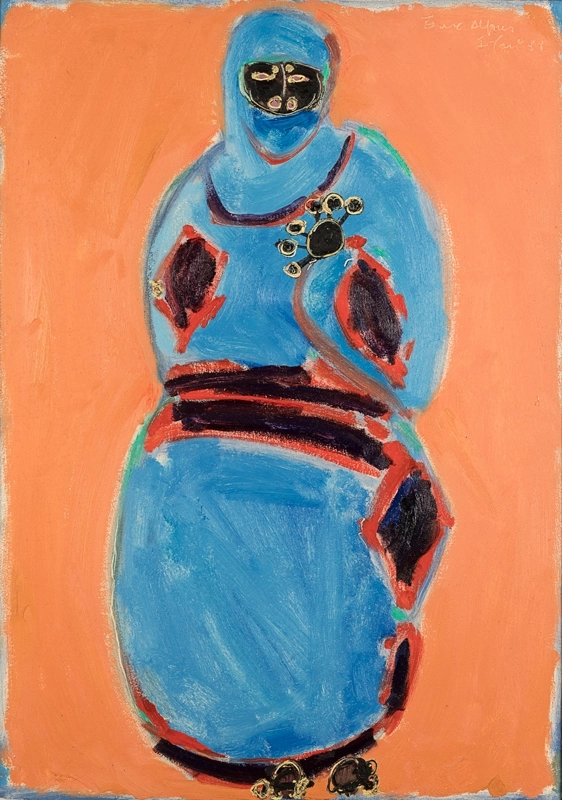
Untitled (Malhafa), 1988
Oil/canvas, 92 x 65 cm
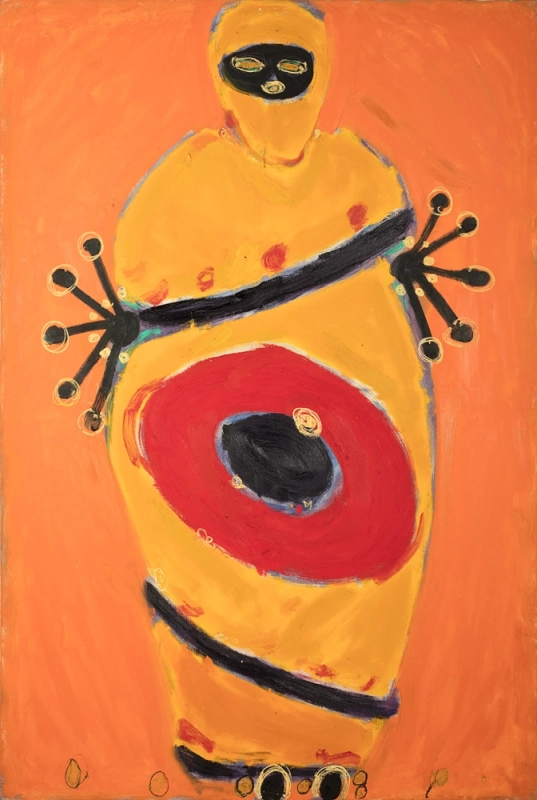
Untitled (Malhafa), 1988
Oil/canvas, 200 x 135 cm
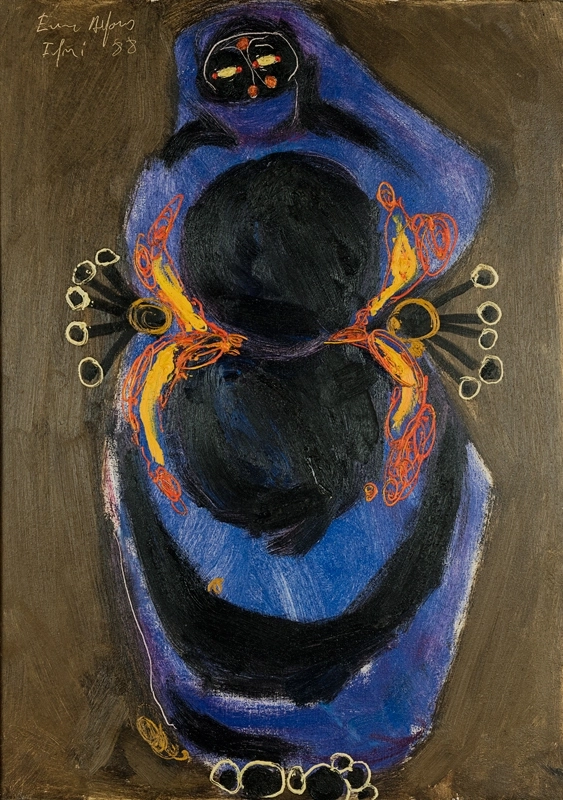
Untitled (Malhafa), 1988
Oil/canvas, 92 x 65 cm
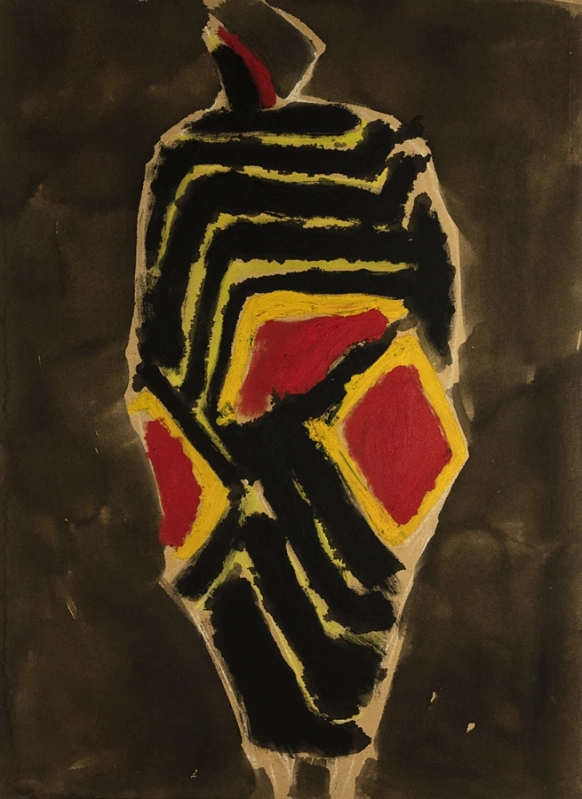
Untitled (Malhafa), c.1989
Oil/canvas, 130 x 95 cm
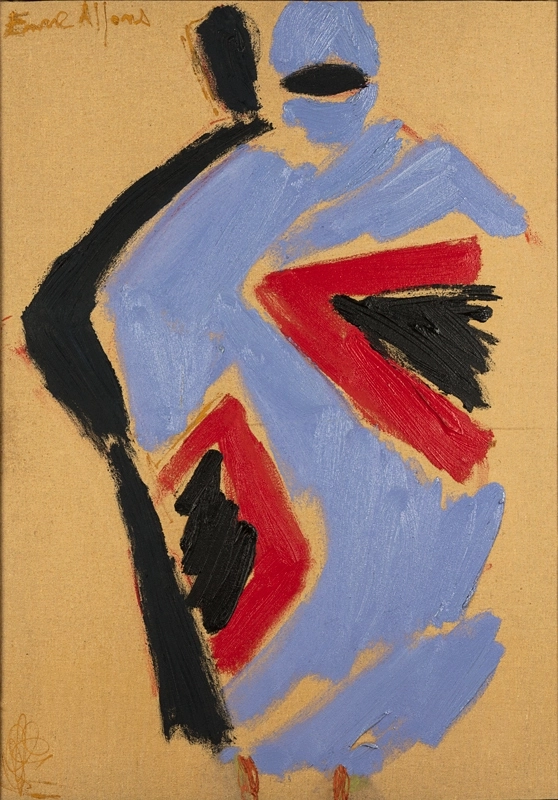
Untitled (Malhafa), c.1989
Oil/canvas, 92 x 65 cm
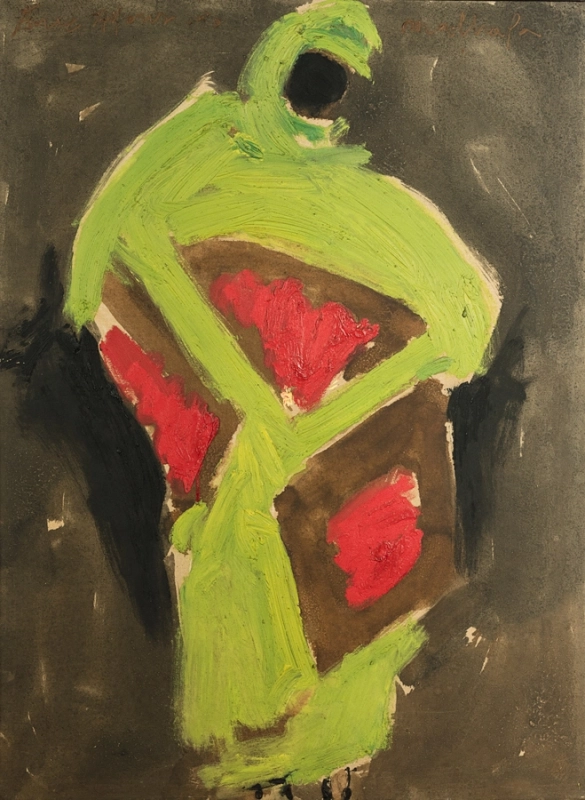
Untitled (Malhafa), c.1989
Oil/canvas, 130 x 97 cm
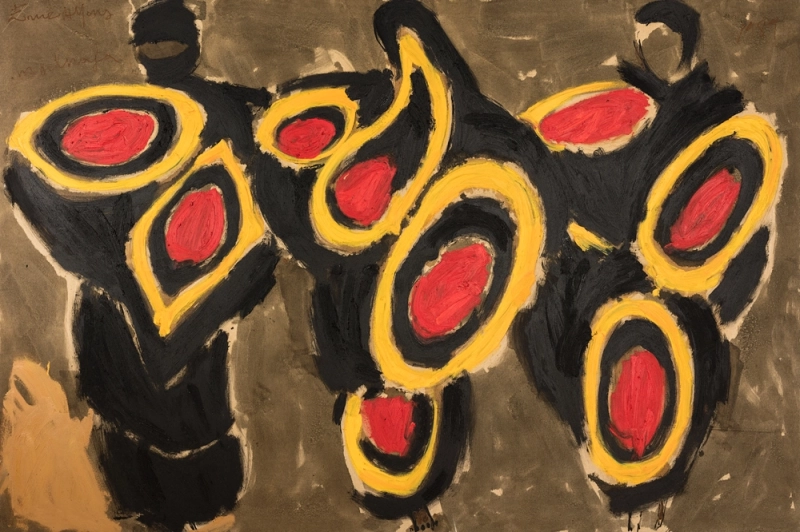
Malhafa, c.1988-1989
Oil/canvas, 200 x 300 cm
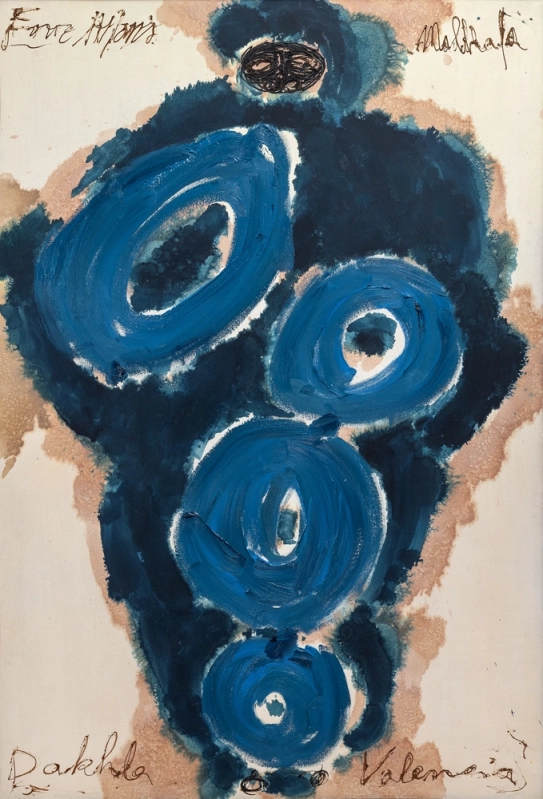
Malhafa, c.1989
Oil/canvas, 200 x 135 cm
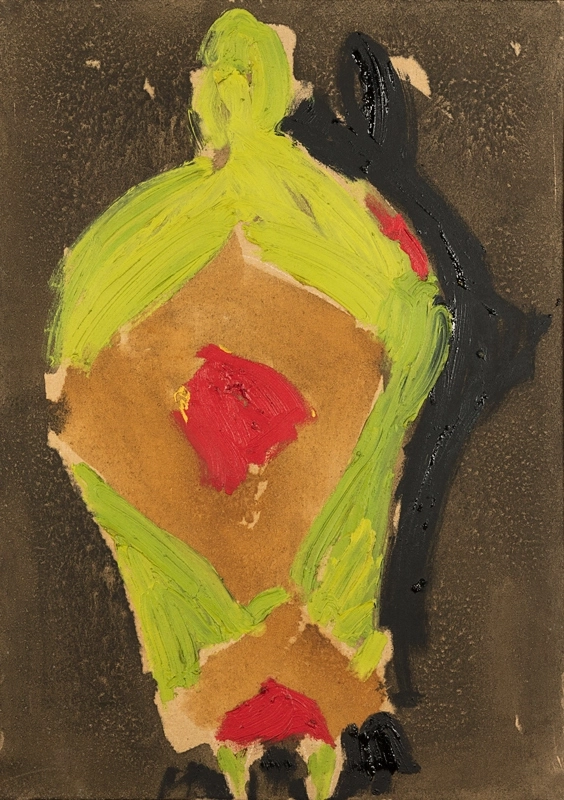
Untitled (Malhafa), c.1989
Oil/canvas, 92 x 65 cm
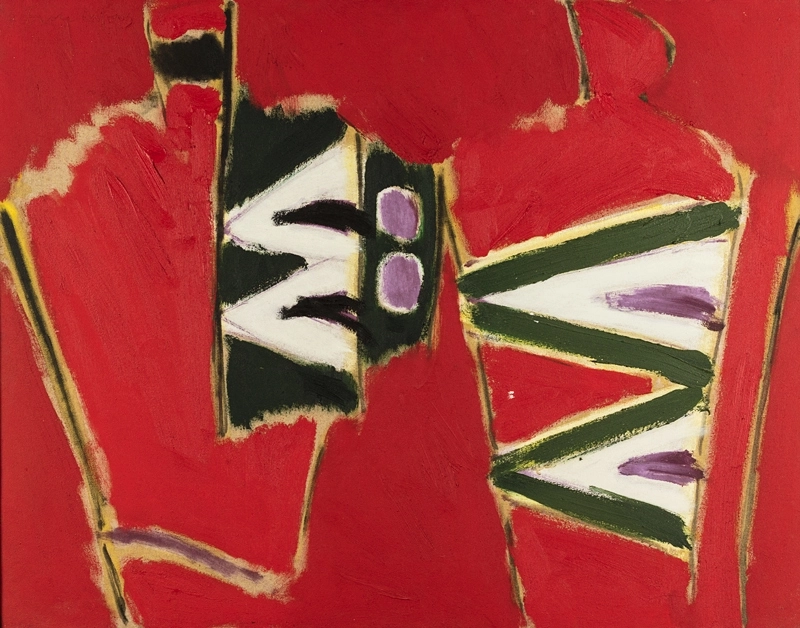
Untitled (Malhafa), c.989-1991
Oil/canvas, 73 x 92 cm
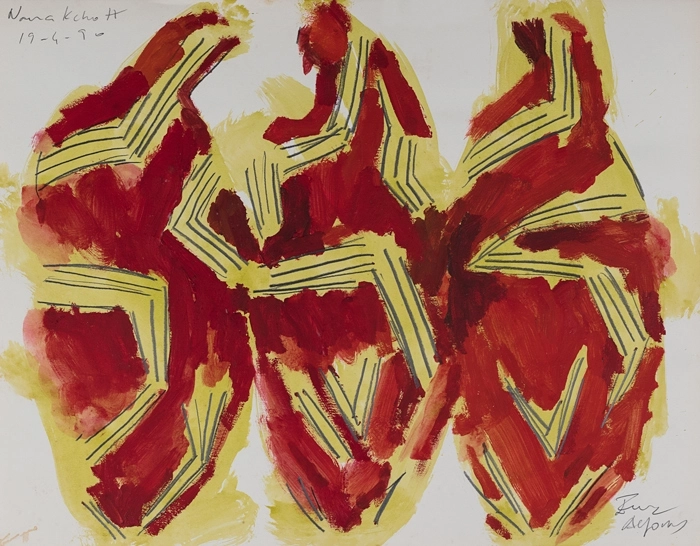
Untitled (Malhafa), c.1990
Mixed media/paper, 50 x 70 cm
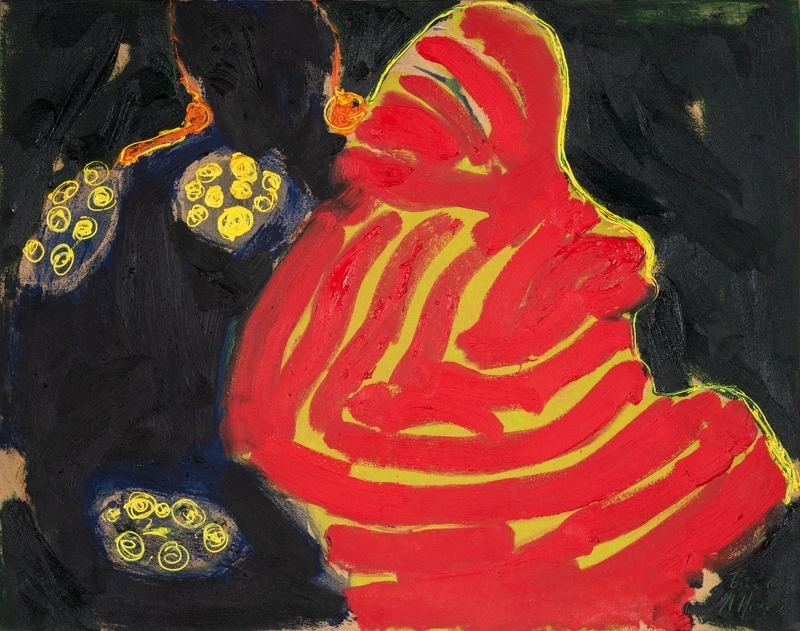
Untitled (Malhafa), c.1989-1991
Oil/canvas, 73 x 92 cm
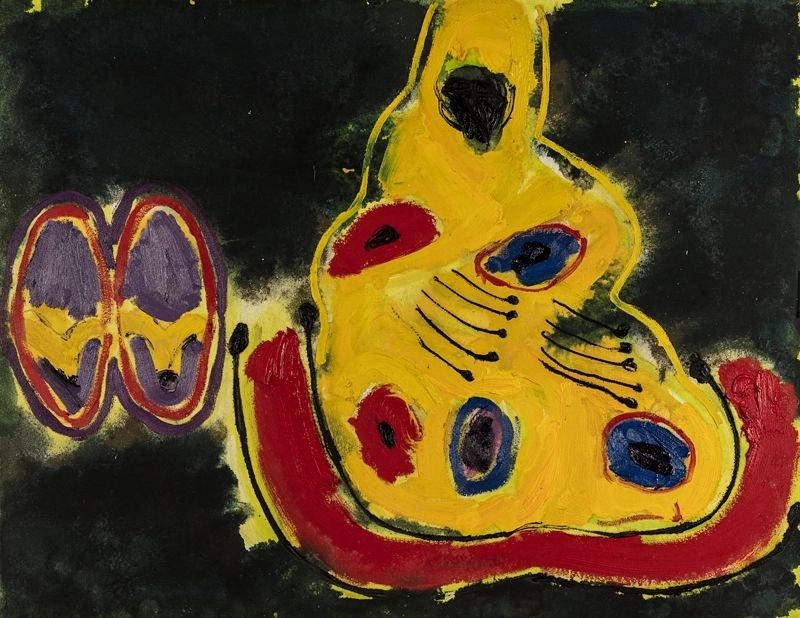
Untitled (Malhafa), c.1989-1991
Oil/canvas, 73 x 92 cm
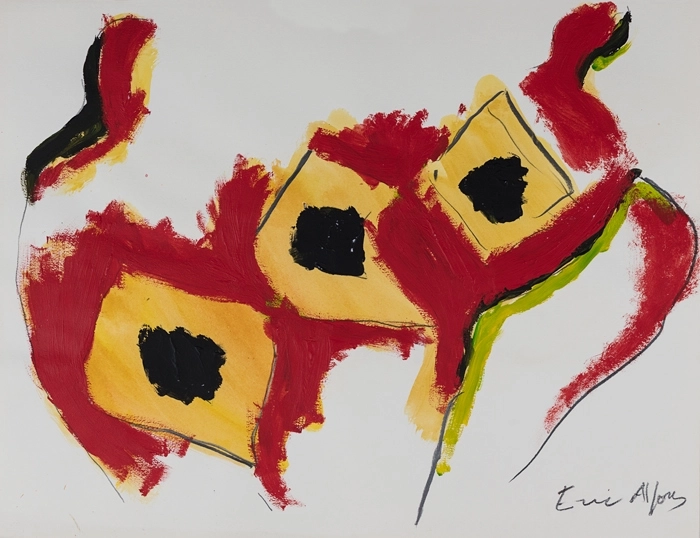
Untitled (Malhafa), c.1990
Mixed media/paper, 50 x 70 cm
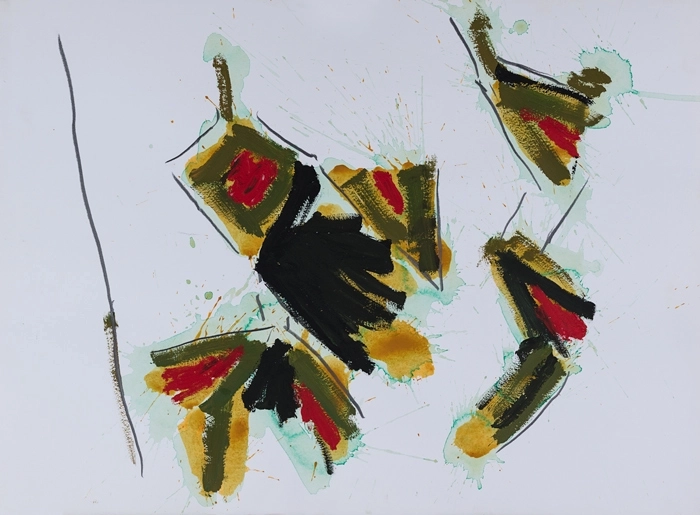
Untitled (Malhafa), c.1990
Mixed media/paper, 50 x 70 cm
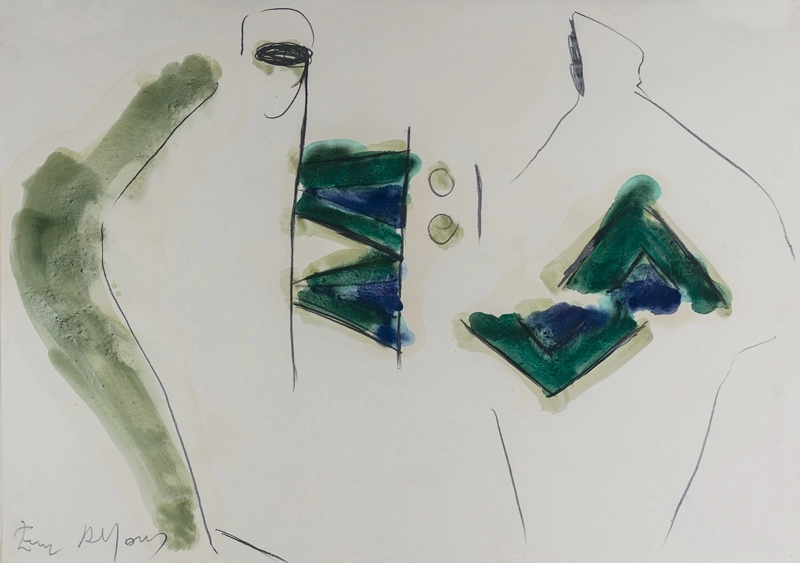
Untitled (Malhafa), c.1989-1991
Mixed media/paper, 70 x 100 cm
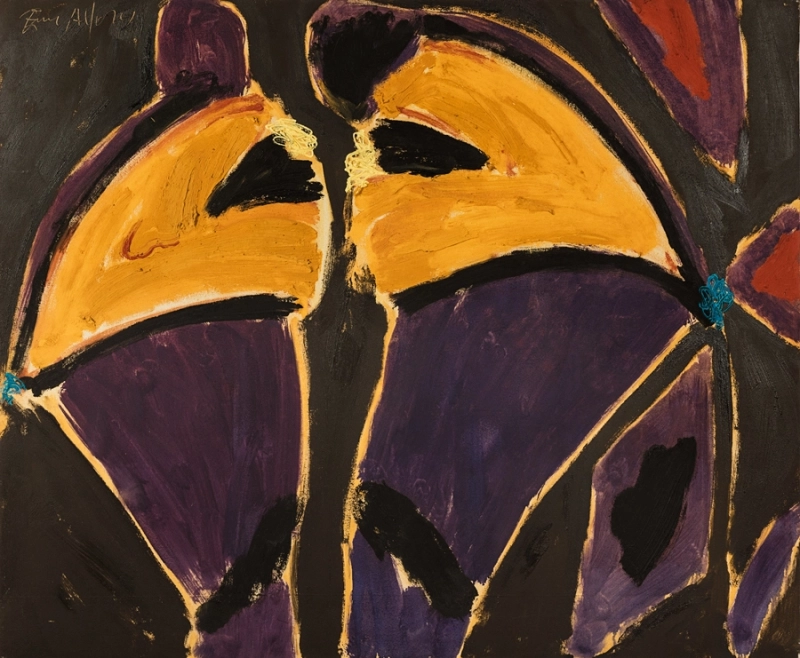
Untitled (Malhafa), c.1989-1991
Oil/canvas, 110 x 130 cm
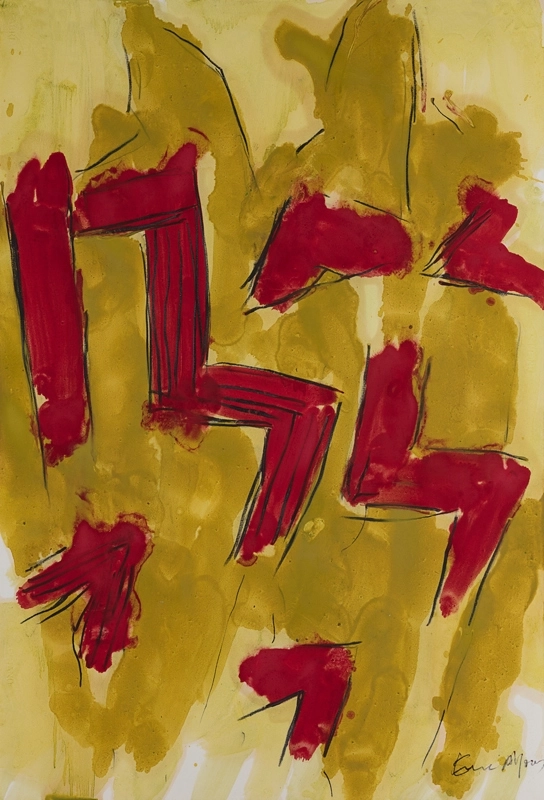
Untitled (Malhafa), c.1990
Mixed media/paper, 100 x 70 cm
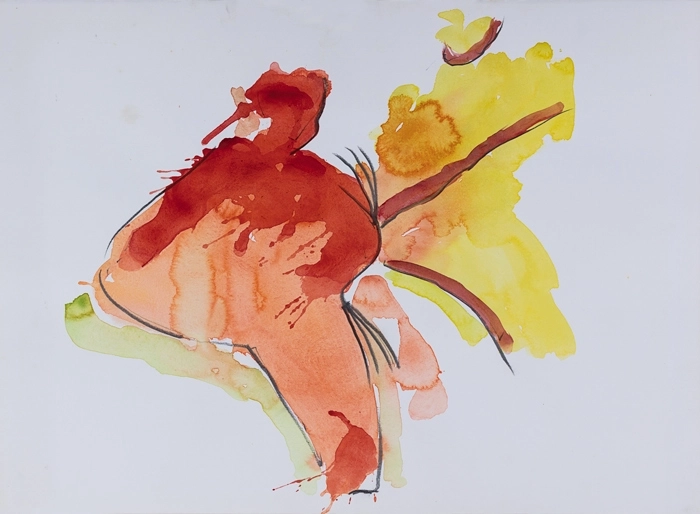
Untitled (Malhafa), c.1989-1991
Mixed media/paper, 50 x 70 cm
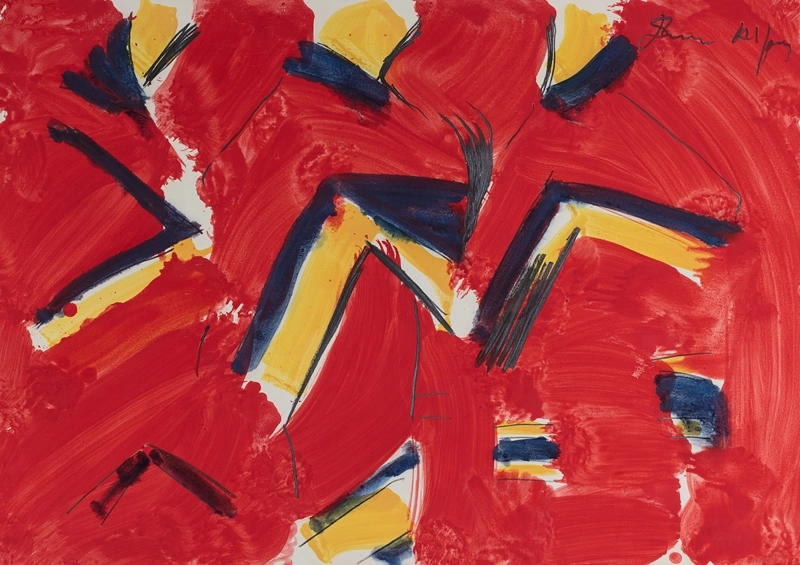
Untitled (Malhafa), c.1990
Mixed media/paper, 70 x 100 cm
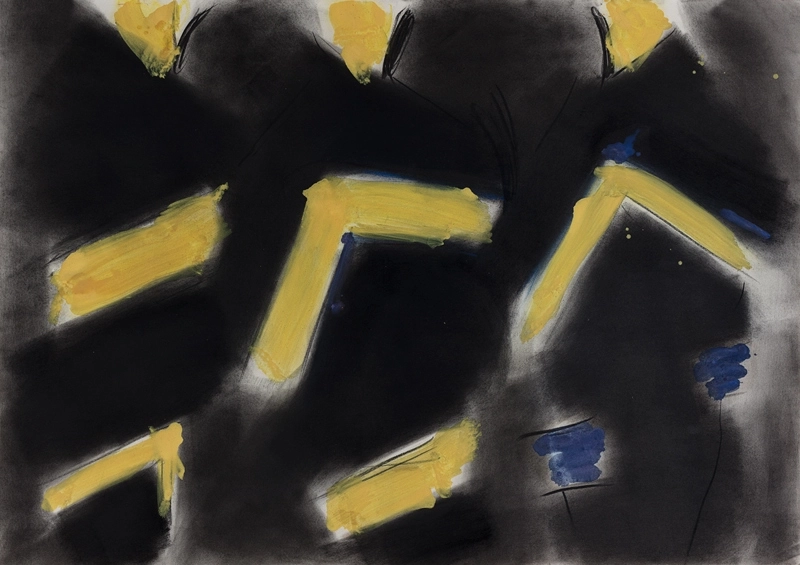
Untitled (Malhafa), c.1990
Mixed media/paper, 70 x 100 cm
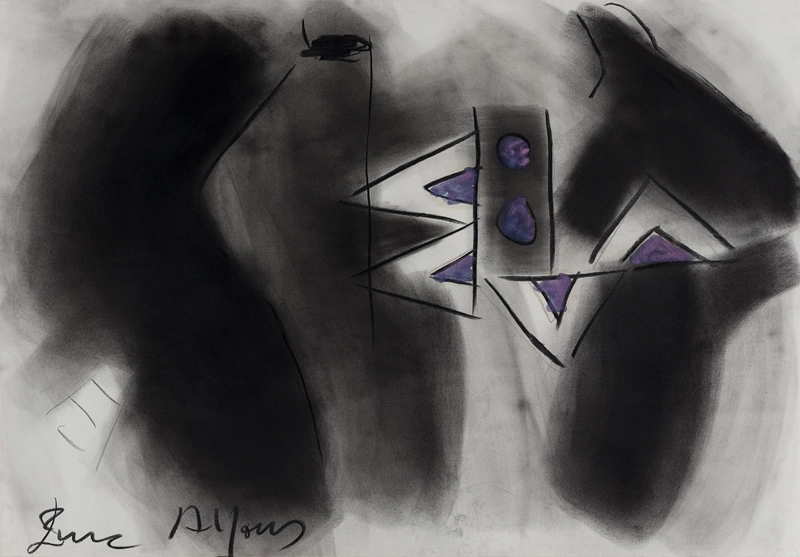
Untitled (Malhafa), c.1989-1991
Mixed media/paper, 70 x 100 cm
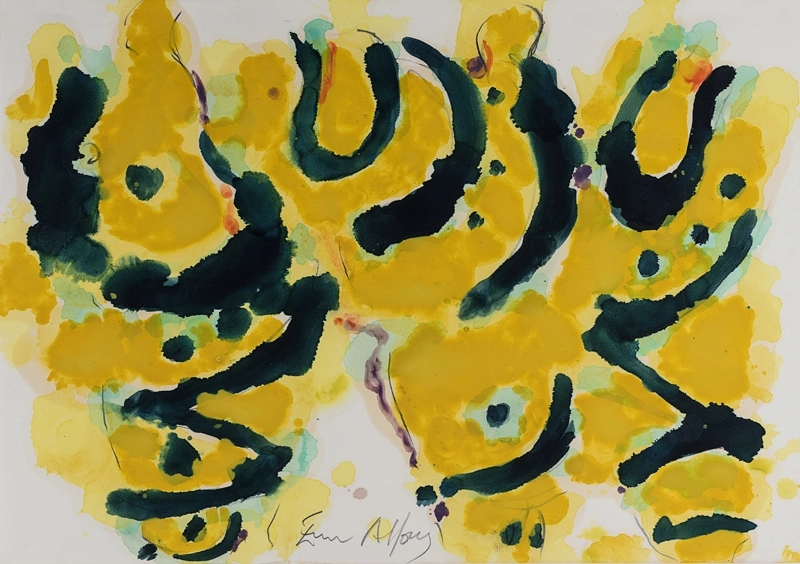
Untitled (Malhafa), c.1990
Mixed media/paper, 70 x 100 cm
