
References - Exhibition catalogues, solo and group shows (selected)
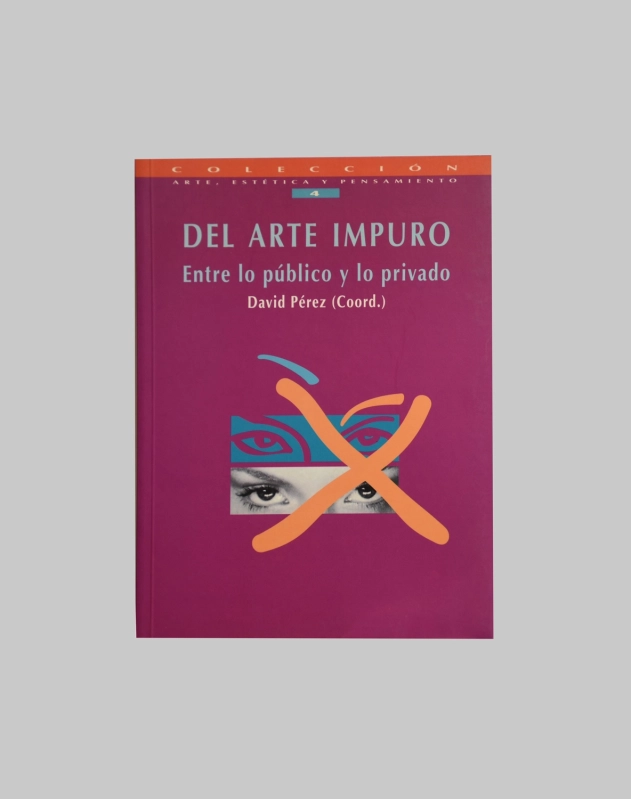

DEL ARTE IMPURO
Entre lo público y lo privado
Edition/year:
D. G. de Promoció Cultural, Museus i Belles Arts.
Conselleria de Cultura, Educacio i Ciència.
© de la edición: Generalitat Valenciana, 1997
Coordinator:
David Pérez
Authors:
David Pérez
Manel Clot
Glòria Picazo
Kevin Power
Carlos Vidal
ISBN:
84 – 482 – 1565 - 6
D. G. de Promoció Cultural, Museus i Belles Arts.
Conselleria de Cultura, Educacio i Ciència.
© de la edición: Generalitat Valenciana, 1997
Coordinator:
David Pérez
Authors:
David Pérez
Manel Clot
Glòria Picazo
Kevin Power
Carlos Vidal
ISBN:
84 – 482 – 1565 - 6
This book is part of the Arte, Estética y Pensamiento Collection, a project aimed at addressing contemporary issues and their influence on current artistic practices from multiple perspectives.
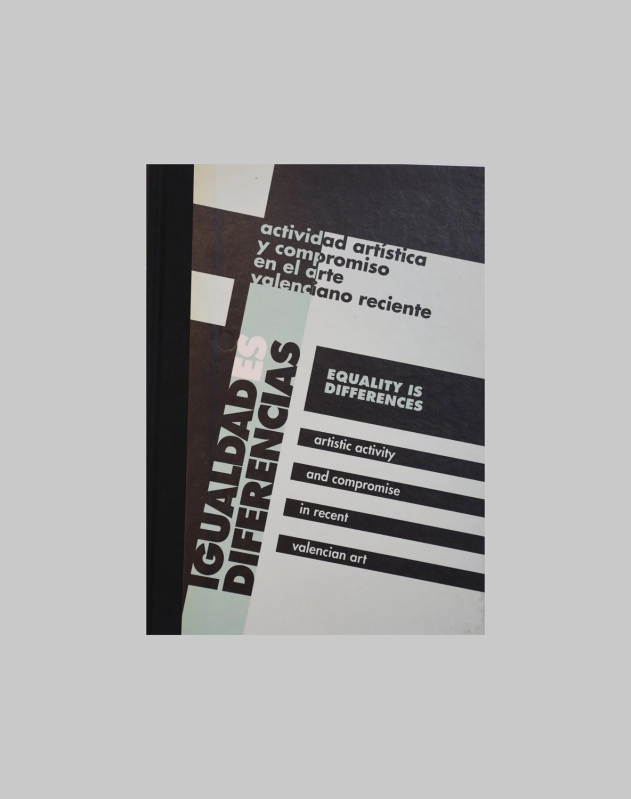
In this case, Del arte impuro: Entre lo público y lo privado [On Impure Art: Between the Public and the Private] is an essay, which, as David Pérez explains, reflects on the core theme of Igualdad es diferencias [Equality Is Difference], a series of exhibitions held throughout the main towns and cities of the Valencian region in 1997, which he curated.
Through a range of different approaches—including the texts of art critics and the curator himself, as well as theoretical contributions and visual material from the artists who participated in the exhibition cycle—the book explores specific aspects of the social and cultural context of the time, to which contemporary art responded with deep commitment: homosexuality and the gay rights movement, war, cultural identity and the political scope of artistic activity. The emergence of new forms of political positioning around these social issues created fertile ground for the proliferation of artistic projects seeking to “transform their immediate reality—a reality in which the private sphere, once made public, becomes entangled and metamorphosed into an essentially political discourse” (David Pérez).
The book includes reproductions of several paintings by Enric Alfons from his Albaneses and Dormir al ras series, which address the theme of migration, as well as his written piece Vagabundo a tiempo parcial [Part-Time Vagabond], in which he recounts how he developed his painting practice while traveling, and how the travel experience itself became integral to his work, as he said in his own words: “Using your right to be wrong, you try to carry the commitment you’ve made—to yourself and to the marginalized—into the realm of creation.”
In this case, Del arte impuro: Entre lo público y lo privado [On Impure Art: Between the Public and the Private] is an essay, which, as David Pérez explains, reflects on the core theme of Igualdad es diferencias [Equality Is Difference], a series of exhibitions held throughout the main towns and cities of the Valencian region in 1997, which he curated.
Through a range of different approaches—including the texts of art critics and the curator himself, as well as theoretical contributions and visual material from the artists who participated in the exhibition cycle—the book explores specific aspects of the social and cultural context of the time, to which contemporary art responded with deep commitment: homosexuality and the gay rights movement, war, cultural identity and the political scope of artistic activity. The emergence of new forms of political positioning around these social issues created fertile ground for the proliferation of artistic projects seeking to “transform their immediate reality—a reality in which the private sphere, once made public, becomes entangled and metamorphosed into an essentially political discourse” (David Pérez).
The book includes reproductions of several paintings by Enric Alfons from his Albaneses and Dormir al ras series, which address the theme of migration, as well as his written piece Vagabundo a tiempo parcial [Part-Time Vagabond], in which he recounts how he developed his painting practice while traveling, and how the travel experience itself became integral to his work, as he said in his own words: “Using your right to be wrong, you try to carry the commitment you’ve made—to yourself and to the marginalized—into the realm of creation.”
