
References - Exhibition catalogues, solo and group shows (selected)
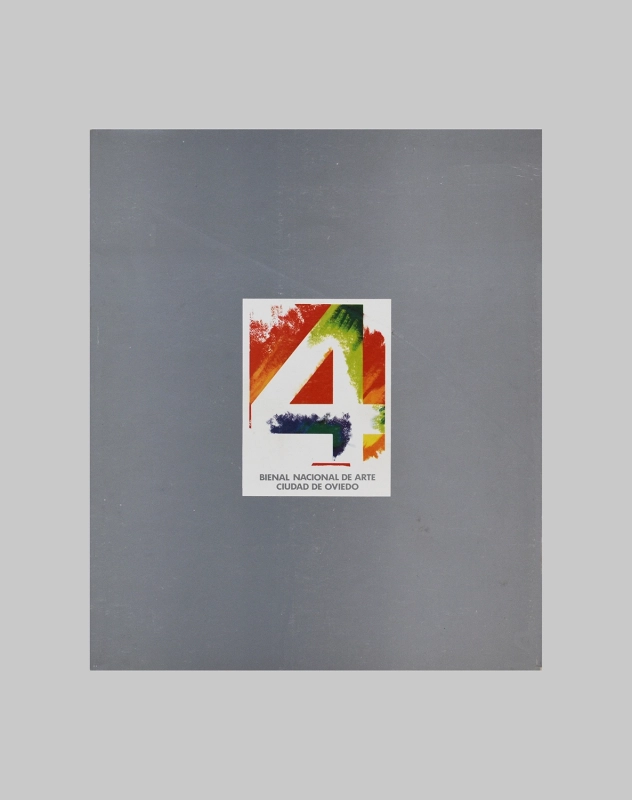
4 BIENAL NACIONAL DE ARTE CIUDAD DE OVIEDO
Edition/year:
Ayuntamiento de Oviedo
1984
Selection and text, by C. Valenciana:
Román de la Calle
Legal Deposit:
O. -2.139/84
Ayuntamiento de Oviedo
1984
Selection and text, by C. Valenciana:
Román de la Calle
Legal Deposit:
O. -2.139/84
The Oviedo Biennial was an art event first introduced in 1976, whose main objective, apart from promoting local artists, was the advancement and revitalization of contemporary art in Spain, offering a platform for both emerging and established artists.
Held between November and December 1984 at the Museum of Fine Arts of Asturias, the fourth edition of the biennial focused on painters born in the 1940s and 1950s, using those decades as the criteria for selecting the artists.
The group of artists and works representing Valencia was selected by Román de la Calle, who also contributed to the exhibition catalogue with an essay called “Generaciones para una transición: la pintura entre la diversificación y el eclecticismo” [Generations for a Transition: Painting between Diversification and Eclecticism]. In it, he analysed the Valencian cultural scene, with a particular emphasis on artists born around the 1950s. Though influenced by preceding stylistic trends, these artists pursued the development of their own aesthetic languages.
Despite the diversity of their various approaches, they shared a commitment to “direct engagement with registers of personal subjectivity, a prioritization of painting as presence in itself […] the pleasure of painting, and chromatic liberation […]”. All of this unfolded within a challenging context—the author refers to “external edges”—in areas such as institutional acquisition of artworks, support from art critics and specialist publications, or gallery representation.
Enric Alfons took part in the exhibition with works from his ongoing series Deessa Màscara.
Held between November and December 1984 at the Museum of Fine Arts of Asturias, the fourth edition of the biennial focused on painters born in the 1940s and 1950s, using those decades as the criteria for selecting the artists.
The group of artists and works representing Valencia was selected by Román de la Calle, who also contributed to the exhibition catalogue with an essay called “Generaciones para una transición: la pintura entre la diversificación y el eclecticismo” [Generations for a Transition: Painting between Diversification and Eclecticism]. In it, he analysed the Valencian cultural scene, with a particular emphasis on artists born around the 1950s. Though influenced by preceding stylistic trends, these artists pursued the development of their own aesthetic languages.
Despite the diversity of their various approaches, they shared a commitment to “direct engagement with registers of personal subjectivity, a prioritization of painting as presence in itself […] the pleasure of painting, and chromatic liberation […]”. All of this unfolded within a challenging context—the author refers to “external edges”—in areas such as institutional acquisition of artworks, support from art critics and specialist publications, or gallery representation.
Enric Alfons took part in the exhibition with works from his ongoing series Deessa Màscara.
